Main Content
In today’s digital-first world, mobile applications are expected to handle millions of users, real-time data, and continuous feature updates. Behind every successful mobile app lies a powerful and scalable backend. For IT firms, designing scalable backend solutions for modern mobile apps is no longer optional—it is a necessity to ensure performance, security, and long-term business growth.
Understanding Backend Scalability
Backend scalability refers to a system’s ability to handle increased workloads without performance degradation. As mobile apps grow in users, features, and data volume, the backend must support this growth seamlessly. Poorly designed backends can lead to slow response times, system crashes, and security vulnerabilities, directly impacting user retention and revenue.
IT firms focus on two main types of scalability:
- Vertical scaling, which involves increasing server resources like CPU and memory.
- Horizontal scaling, which adds more servers to distribute the load efficiently.
Modern mobile apps primarily rely on horizontal scaling because it offers better flexibility and fault tolerance.
Cloud-Based Backend Infrastructure
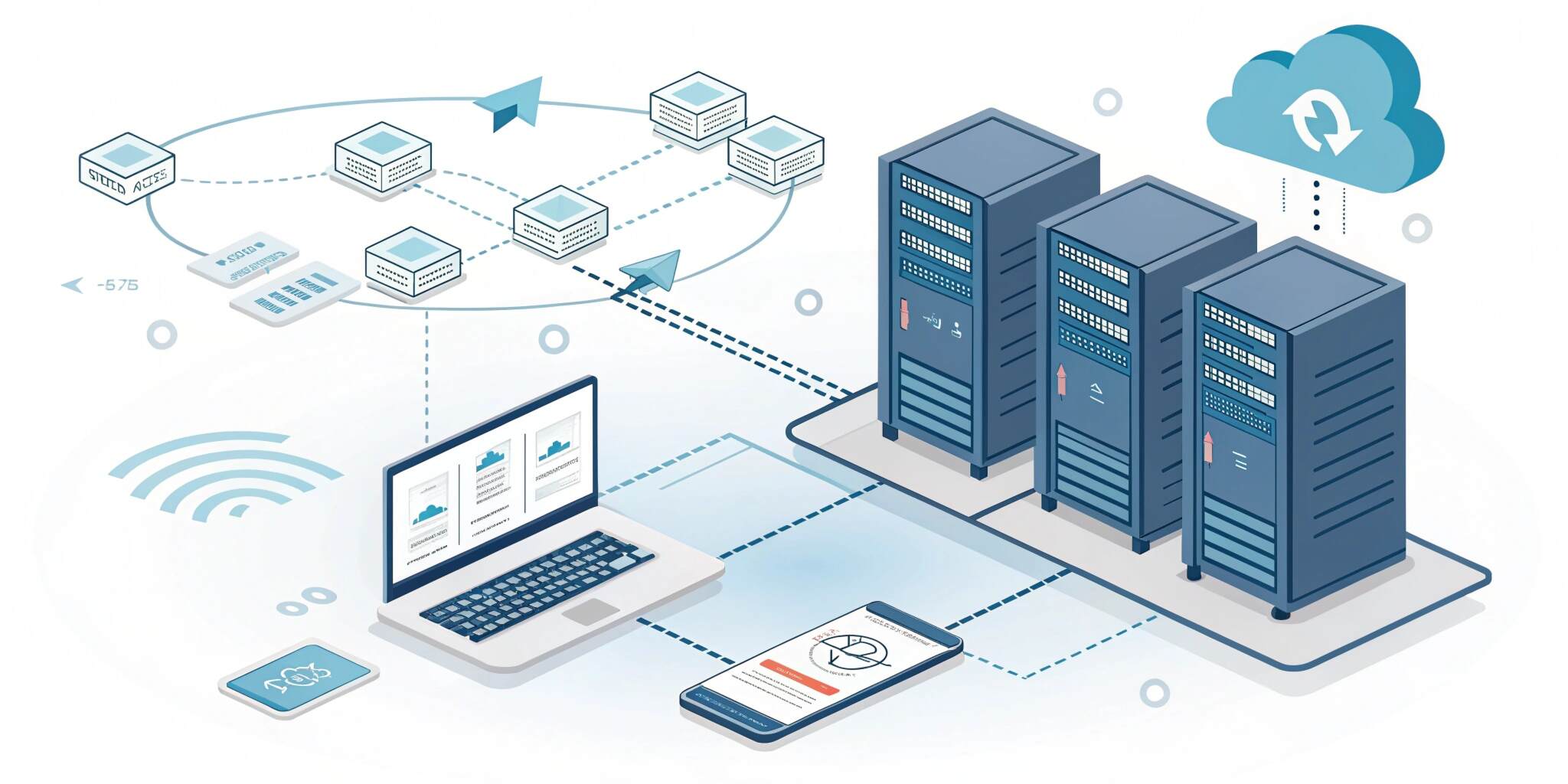
Cloud computing plays a central role in building scalable backend solutions. Platforms like AWS, Google Cloud, and Azure allow IT firms to deploy applications on-demand, scale resources automatically, and reduce infrastructure costs. Cloud services support load balancing, auto-scaling, and disaster recovery, making them ideal for modern mobile app backends.
Using cloud-native services such as managed databases, object storage, and serverless functions enables faster development and easier maintenance. IT firms can focus more on business logic rather than managing physical servers.
Microservices Architecture for Flexibility
Microservices architecture has become a preferred approach for scalable backend development. Instead of building a single monolithic backend, applications are divided into smaller, independent services. Each service handles a specific function such as authentication, payments, notifications, or analytics.
This approach offers multiple advantages:
- Independent scaling of services based on demand
- Faster deployment cycles
- Improved fault isolation
- Easier technology upgrades
For IT firms handling complex mobile apps, microservices ensure flexibility and long-term maintainability.
API-Driven Development
Modern mobile apps rely heavily on APIs to communicate with backend services. RESTful APIs and GraphQL are widely used to deliver data efficiently across devices and platforms. Well-designed APIs help maintain performance even under high traffic conditions.
Scalable APIs should include proper versioning, caching mechanisms, and rate limiting. IT firms also implement API gateways to manage authentication, monitoring, and traffic control centrally.
Database Scalability and Performance
Databases are often the bottleneck in backend systems if not designed properly. IT firms choose databases based on application requirements, such as relational databases for structured data or NoSQL databases for high-volume, unstructured data.
Techniques like database sharding, replication, and indexing help maintain performance as data grows. In-memory caching solutions such as Redis or Memcached further reduce database load and improve response times.
Security and Reliability
Scalability must go hand in hand with security. As mobile apps grow, they become more attractive targets for cyberattacks. IT firms implement secure authentication mechanisms, encryption, and role-based access control to protect user data.
Monitoring and logging tools are also essential for maintaining reliability. Real-time monitoring helps detect issues early, while automated backups and failover systems ensure business continuity.
Why IT Firms Must Invest in Scalable Backends
A scalable backend allows mobile apps to grow without major architectural changes. It reduces downtime, improves user experience, and supports faster innovation. For IT firms, delivering scalable backend solutions enhances credibility and long-term client relationships.
By combining cloud infrastructure, microservices, API-driven development, optimized databases, and robust security practices, IT firms can build backend systems that are future-ready and capable of supporting modern mobile applications at scale.