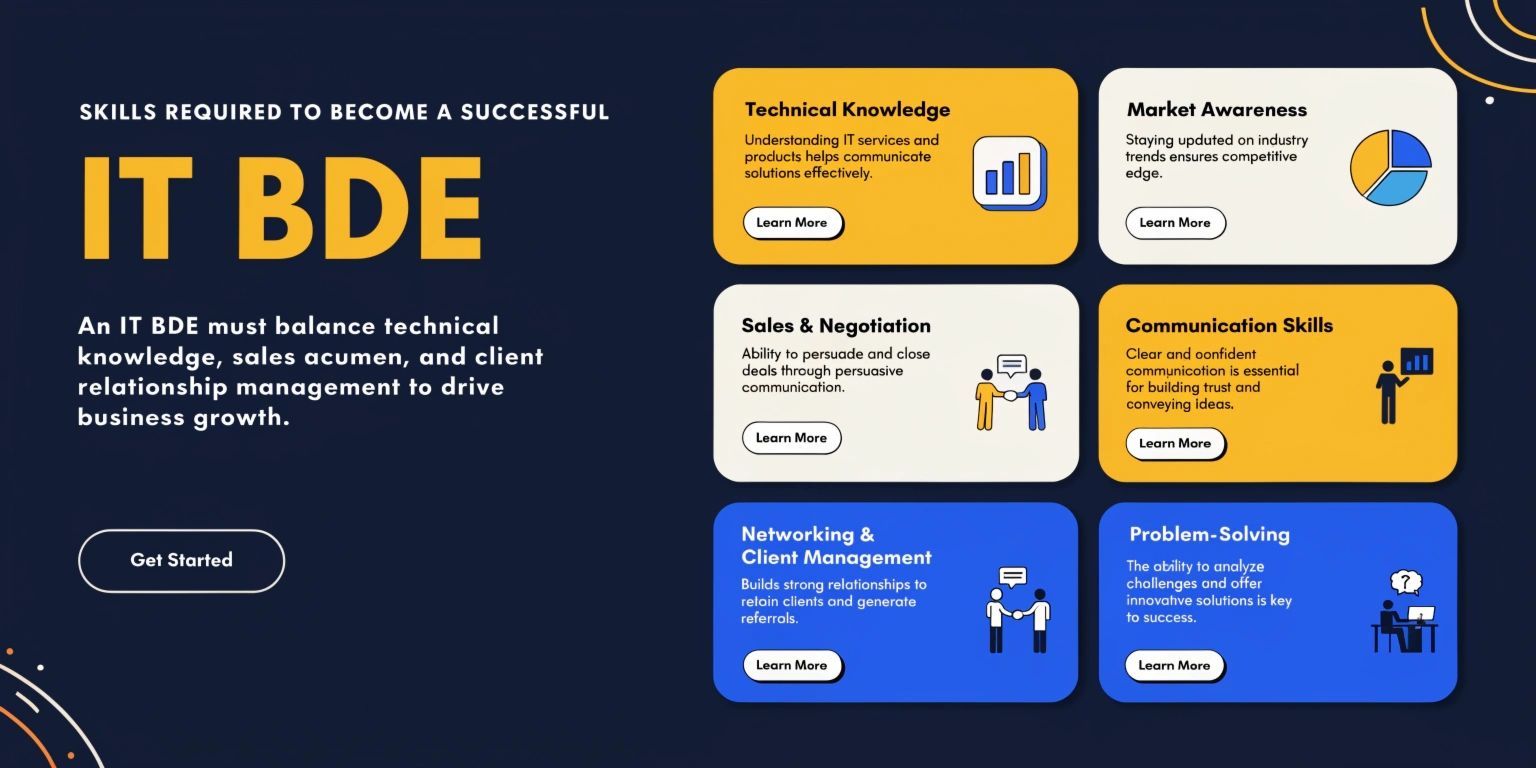
The IT industry is one of the fastest-growing sectors globally, and with increasing competition among software companies, the role of an IT Business Development Executive (BDE) has become more important than ever. A successful IT BDE is not just a salesperson—they act as the bridge between clients and technical teams, helping companies generate revenue, build relationships, and secure long-term projects.
In today’s competitive market, companies expect IT BDEs to possess a combination of communication skills, technical understanding, strategic thinking, and digital outreach expertise. Whether you are a fresher entering the field or an experienced professional aiming for growth, mastering these skills is essential.
1. Strong Communication Skills
Communication is the foundation of business development.
An IT BDE must:
- Communicate clearly with international clients
- Understand client requirements
- Present company services professionally
- Build trust during meetings and calls
This includes:
- Verbal communication
- Written communication
- Email etiquette
- Video conferencing skills
Since many IT companies work with overseas clients, fluency and confidence in English communication are highly valuable.
2. Understanding of IT Services
A successful IT BDE does not need to become a developer, but they must understand the basics of technology.
Knowledge areas include:
- Web development
- Mobile app development
- UI/UX services
- Digital marketing
- AI & ML solutions
- Game development
Understanding technologies helps BDEs:
- Explain solutions confidently
- Handle client questions
- Coordinate effectively with technical teams
For example, if a client asks about React, Flutter, or Node.js, the BDE should understand the business value of these technologies.
3. Lead Generation Skills
Generating quality leads is one of the primary responsibilities of a BDE.
Popular lead generation channels include:
- Upwork
- Freelancer
- Cold emailing
- Networking events
- Company websites
A skilled IT BDE knows how to:
- Identify potential clients
- Research businesses
- Find decision-makers
- Create personalized outreach strategies
Lead quality matters more than quantity.
4. Proposal Writing & Bidding Skills
Platforms like Upwork and Freelancer require strong bidding strategies.
An effective proposal should:
- Be personalized
- Address client pain points
- Highlight company expertise
- Include a strong call-to-action
Generic copy-paste proposals rarely work in today’s competitive freelance marketplaces.
A successful BDE understands how to position services based on client requirements.
5. Negotiation Skills
Negotiation directly impacts project profitability and client relationships.
A good BDE should know:
- How to discuss budgets professionally
- How to justify pricing
- When to compromise
- How to close deals without sounding aggressive
Strong negotiation skills help create win-win situations for both clients and companies.
6. Relationship Management
Business development is not only about getting new clients—it is also about retaining them.
Long-term relationships generate:
- Repeat business
- Referrals
- Larger contracts
An IT BDE should:
- Follow up regularly
- Maintain professionalism
- Resolve client concerns quickly
- Build trust over time
Client satisfaction often determines company growth.
7. CRM & Sales Funnel Management
Modern IT companies use CRM (Customer Relationship Management) tools to manage leads and sales pipelines.
Popular CRM platforms include:
- HubSpot
- Zoho CRM
- Salesforce
A BDE should know how to:
- Track leads
- Schedule follow-ups
- Monitor conversions
- Analyze sales performance
Organized sales management improves productivity and conversion rates.
8. Market Research & Competitive Analysis
Understanding the market helps BDEs identify opportunities and position services effectively.
Important research areas include:
- Industry trends
- Competitor services
- Pricing strategies
- Client pain points
- Emerging technologies
For example, increasing demand for AI solutions or blockchain development can help BDEs target high-growth industries.
9. Time Management & Multitasking
An IT BDE often handles multiple clients and platforms simultaneously.
Daily activities may include:
- Sending proposals
- Conducting meetings
- Following up with leads
- Coordinating with teams
- Managing CRM updates
Strong time management ensures consistent productivity.
10. Confidence & Problem-Solving Ability
Clients prefer professionals who appear confident and solution-oriented.
A successful BDE should:
- Handle objections calmly
- Offer alternative solutions
- Adapt to changing requirements
- Think strategically during discussions
Confidence builds credibility and increases closing rates.
Career Growth Opportunities
A skilled IT BDE can grow into:
- Business Development Manager
- Sales Manager
- Account Manager
- International Sales Executive
- Partnership Manager
With experience, professionals can handle larger international accounts and strategic business expansion.
Final Thoughts
The role of an IT Business Development Executive is evolving rapidly with digital transformation and global competition. Today’s successful BDEs combine communication, technical understanding, strategic outreach, and relationship management to drive business growth.
Mastering these skills not only increases job opportunities but also builds long-term career stability in the IT industry.
For anyone aiming to succeed in IT business development, continuous learning, practical experience, and adaptability are the keys to long-term success.