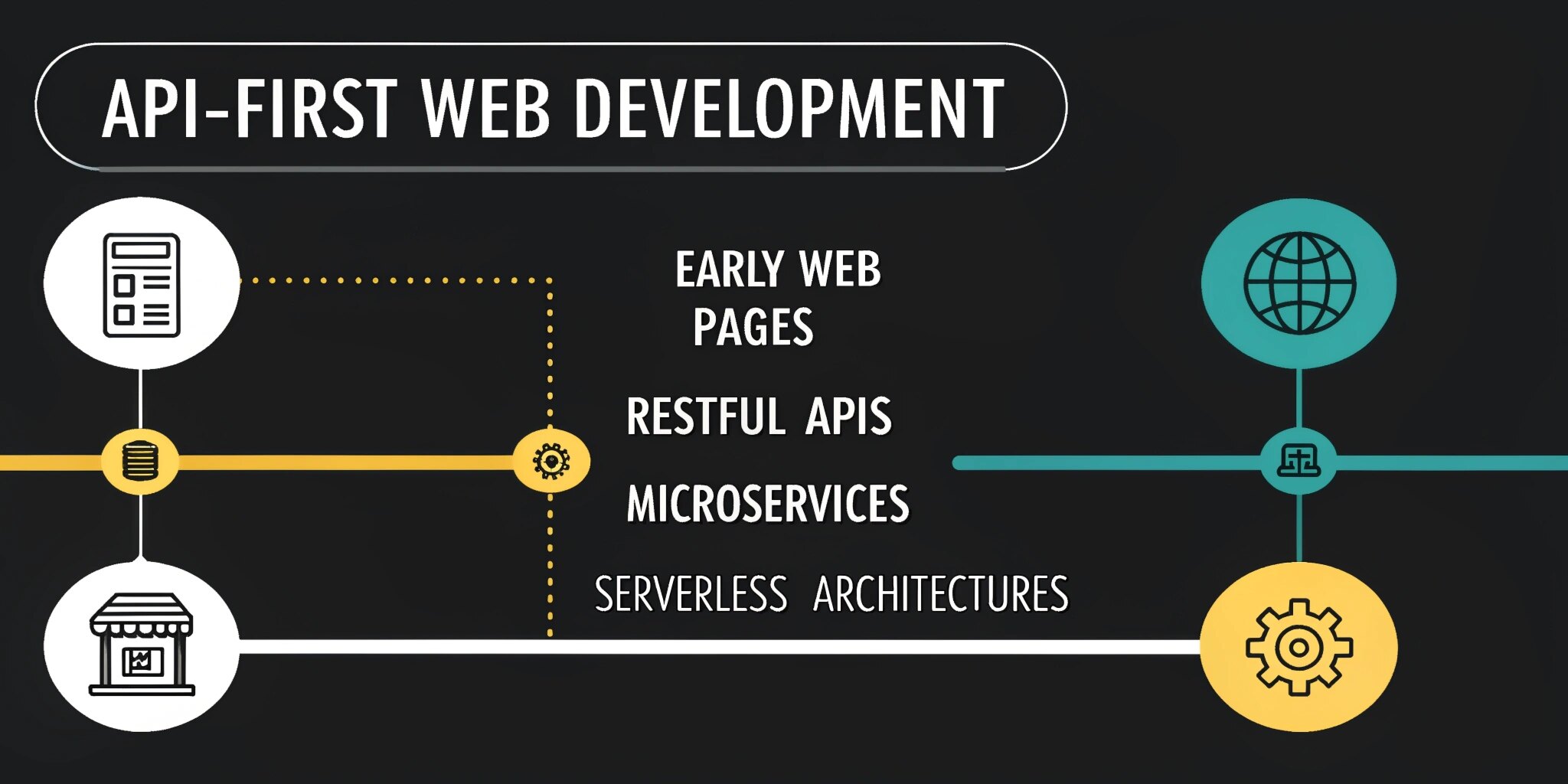
The evolution of web development has shifted dramatically from monolithic servers and static pages to dynamic, distributed, and highly integrated digital ecosystems. In this transformation, API-First Web Development has emerged as a foundational principle powering modern applications. Rather than treating APIs as an afterthought, organizations now design them at the core of the development process, enabling greater flexibility, scalability, and interoperability across platforms.
Traditionally, web applications were designed as single, tightly coupled systems where frontend, backend, and data logic existed in the same structure. While this approach worked for simpler products, it became inefficient as user expectations and system complexity increased. The need for real-time interactions, omnichannel delivery, and integration with third-party services led developers to adopt more modular architectures. This shift unlocked the rise of the API-First movement, microservices, cloud-native deployment, and headless development models.
API-First architecture begins with defining and designing robust APIs before building user interfaces or internal logic. Teams create standardized API specifications (e.g., Swagger/ OpenAPI) and test them early to ensure clear communication across development units. This strategic approach allows multiple teams to work in parallel, reducing development time and minimizing dependencies. Through versioning, testing automation, and documentation, APIs become reusable assets that can support new services without rebuilding existing systems.
Modern API development introduces flexibility by enabling businesses to integrate multiple technologies effortlessly. Whether using REST for broad compatibility, GraphQL for efficient querying, or real-time interactions via WebSockets and webhooks, APIs enable both internal and external connectivity. This interoperability allows companies to integrate payment gateways, AI services, data analytics tools, CRMs, ERP systems, IoT devices, or automation workflows within minutes rather than months.
Another major advantage of API-First Web Development is the rise of headless and decoupled architectures. Instead of tying the frontend and backend together, a headless system provides data independently through APIs while the user interface can be built using any framework such as React, Angular, Vue.js, Flutter, or Swift. This enables omnichannel delivery across web, mobile, smart devices, wearables, and kiosks—all powered by the same API layer. E-commerce platforms, streaming services, and enterprise solutions increasingly adopt this approach to enhance performance and accelerate global rollout.
Scalability and performance are further enhanced through microservices, where each service runs independently and communicates through APIs. This architecture supports fault tolerance, rapid maintenance, and easier updates without affecting the entire application. Combined with container orchestration tools like Kubernetes and serverless technologies, deployment and elasticity become significantly more efficient.
API-First development also improves security through standardized authentication practices such as OAuth, JWT, and Zero-Trust compliance. Centralized API gateways help enforce traffic control, rate limiting, monitoring, and threat protection to ensure a secure data exchange layer. Modern businesses rely on APIs not only for product delivery but also for enabling digital transformation.
As industries embrace automation and AI integration, APIs act as bridges connecting intelligent systems. AI-powered personalization, automated workflows, and data-driven decision models depend heavily on structured API connections. The future will continue evolving toward self-service APIs, low-code development, unified API management platforms, and standardized governance.
In conclusion, the API-First approach is no longer optional but essential for businesses building competitive digital products. By prioritizing scalability, speed, interoperability, and omnichannel experiences, API-First Web Development establishes the foundation for next-generation applications. Organizations adopting this strategy can innovate faster, integrate new technologies seamlessly, and deliver superior customer experiences across modern digital ecosystems.