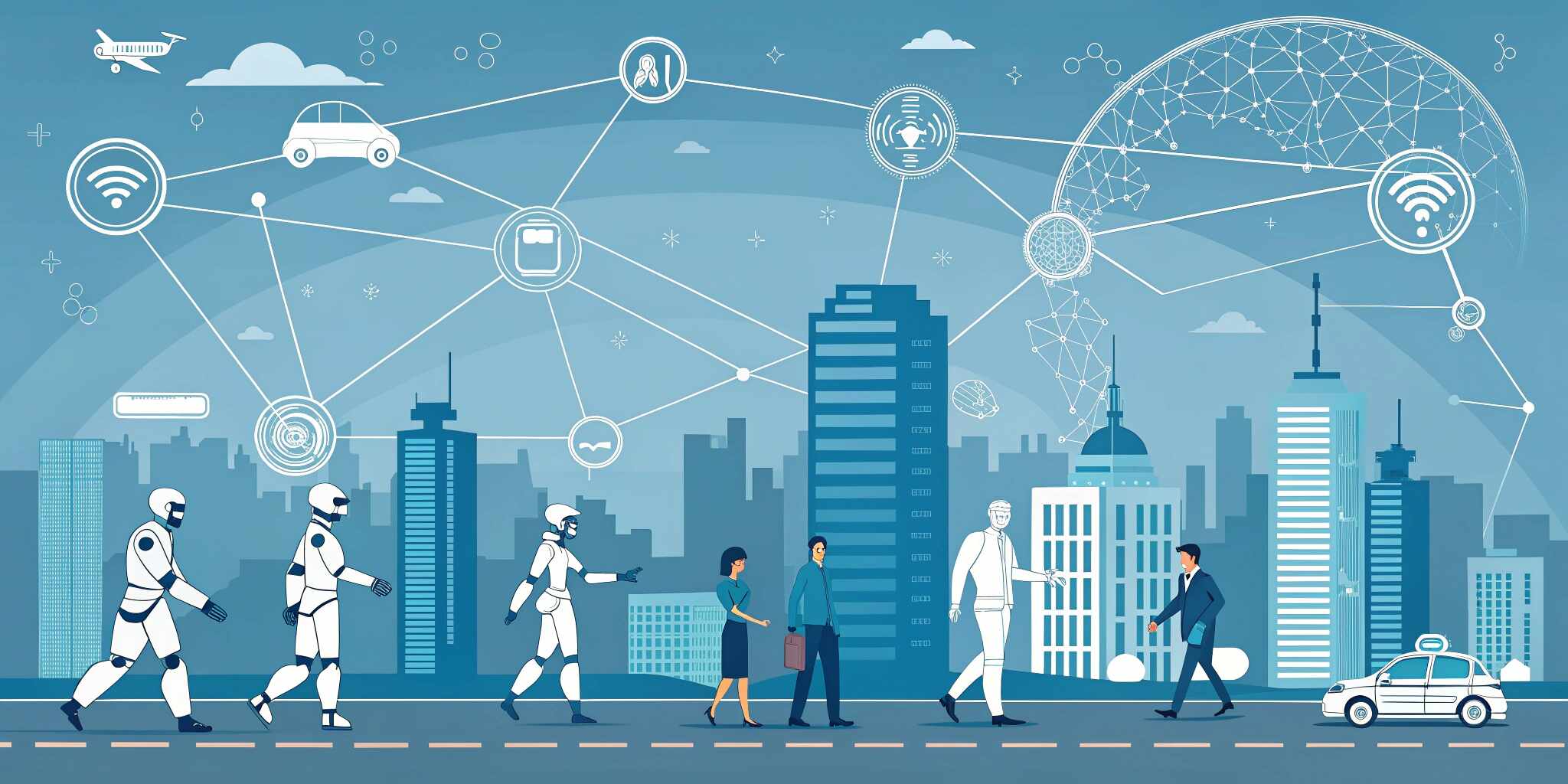
The Rise of AI Agent Development in Modern Technology
Artificial Intelligence has rapidly evolved from simple automation systems to highly intelligent autonomous agents capable of understanding, reasoning, learning, and executing tasks with minimal human intervention. AI Agent Development has become one of the most transformative innovations in the technology sector, enabling businesses to streamline operations, enhance customer experiences, and create smarter digital ecosystems.
AI agents are software systems designed to perceive environments, process information, and take actions to achieve predefined goals. These intelligent systems use technologies such as Machine Learning, Natural Language Processing, Deep Learning, and Generative AI to make informed decisions and continuously improve performance over time.
Understanding AI Agents
An AI agent functions similarly to a human assistant but operates through advanced algorithms and intelligent workflows. These agents can analyze user behavior, automate repetitive processes, respond to customer queries, recommend actions, and even perform predictive analysis.
There are several types of AI agents used across industries:
- Reactive Agents
- Goal-Based Agents
- Utility-Based Agents
- Learning Agents
- Autonomous Multi-Agent Systems
Each type serves different business requirements depending on the complexity and scale of operations.
For example, customer service chatbots use conversational AI to handle support requests, while enterprise AI agents assist organizations in managing internal operations, analyzing business data, and automating decision-making processes.
Key Technologies Behind AI Agent Development
Modern AI agent systems are powered by a combination of advanced technologies that work together to create intelligent and adaptive behavior.
Machine Learning and Deep Learning
Machine Learning allows AI agents to learn from historical data and improve accuracy over time. Deep Learning enhances this capability by using neural networks to recognize patterns, process speech, and interpret visual information.
Natural Language Processing (NLP)
NLP enables AI agents to understand human language, interpret context, and communicate naturally. This technology powers AI chatbots, virtual assistants, and automated customer support systems.
Generative AI
Generative AI has significantly expanded the capabilities of intelligent agents. AI systems can now generate text, code, images, reports, and recommendations based on user instructions and contextual understanding.
Cloud Computing and APIs
Cloud platforms and API integrations allow AI agents to access real-time data, connect with external applications, and scale efficiently across enterprise environments.
Benefits of AI Agent Development
Businesses across industries are investing in AI agent solutions because of the numerous advantages they offer.
Improved Operational Efficiency
AI agents automate repetitive tasks such as scheduling, data entry, reporting, and customer communication. This reduces manual effort and improves workflow efficiency.
Enhanced Customer Experience
AI-powered virtual assistants provide instant responses, personalized recommendations, and 24/7 support, improving customer satisfaction and engagement.
Intelligent Decision-Making
Advanced AI systems analyze massive amounts of data to generate insights, predict outcomes, and support strategic business decisions.
Cost Reduction
Automation minimizes operational costs by reducing human dependency for repetitive processes and improving resource utilization.
Scalability
AI agents can handle thousands of simultaneous interactions without performance degradation, making them highly scalable for growing businesses.
Applications of AI Agents Across Industries
AI Agent Development is transforming nearly every industry by enabling intelligent automation and smarter digital services.
Healthcare
AI agents assist in patient monitoring, medical diagnosis, appointment scheduling, and predictive healthcare analytics.
Finance
Banks and financial institutions use AI agents for fraud detection, risk assessment, automated trading, and customer support.
E-Commerce
Online businesses leverage AI-powered recommendation engines, shopping assistants, and automated customer service systems to improve user experiences.
Education
Educational platforms use AI tutors and personalized learning assistants to enhance learning outcomes and student engagement.
Software Development
AI coding assistants help developers generate code, debug applications, automate testing, and improve development productivity.
Challenges in AI Agent Development
Despite its advantages, AI Agent Development also presents several challenges.
Data Privacy and Security
AI systems require access to large amounts of data, making security and privacy protection critical concerns.
Ethical AI Usage
Organizations must ensure that AI agents operate fairly, transparently, and without bias.
Infrastructure Requirements
Developing advanced AI systems requires significant computational power, cloud infrastructure, and technical expertise.
Continuous Training
AI models need regular updates and training to maintain accuracy and adapt to changing business environments.
The Future of AI Agent Development
The future of AI agents is highly promising. Businesses are moving toward fully autonomous digital ecosystems where intelligent agents collaborate, analyze data, and execute workflows independently.
Future AI systems will become more human-like in communication, reasoning, and problem-solving capabilities. Multi-agent collaboration systems, AI-powered robotics, and self-improving enterprise platforms are expected to dominate the next generation of technological innovation.
Companies investing in AI Agent Development today are positioning themselves for long-term growth, competitive advantage, and digital transformation success.
As AI technologies continue to evolve, intelligent agents will play a central role in reshaping industries, improving productivity, and driving innovation across the global digital economy.