For decades, software applications have functioned as tools that execute commands based on predefined instructions. Whether it was a customer relationship management system, an e-commerce platform, or a mobile application, software largely depended on human input to initiate actions and make decisions.
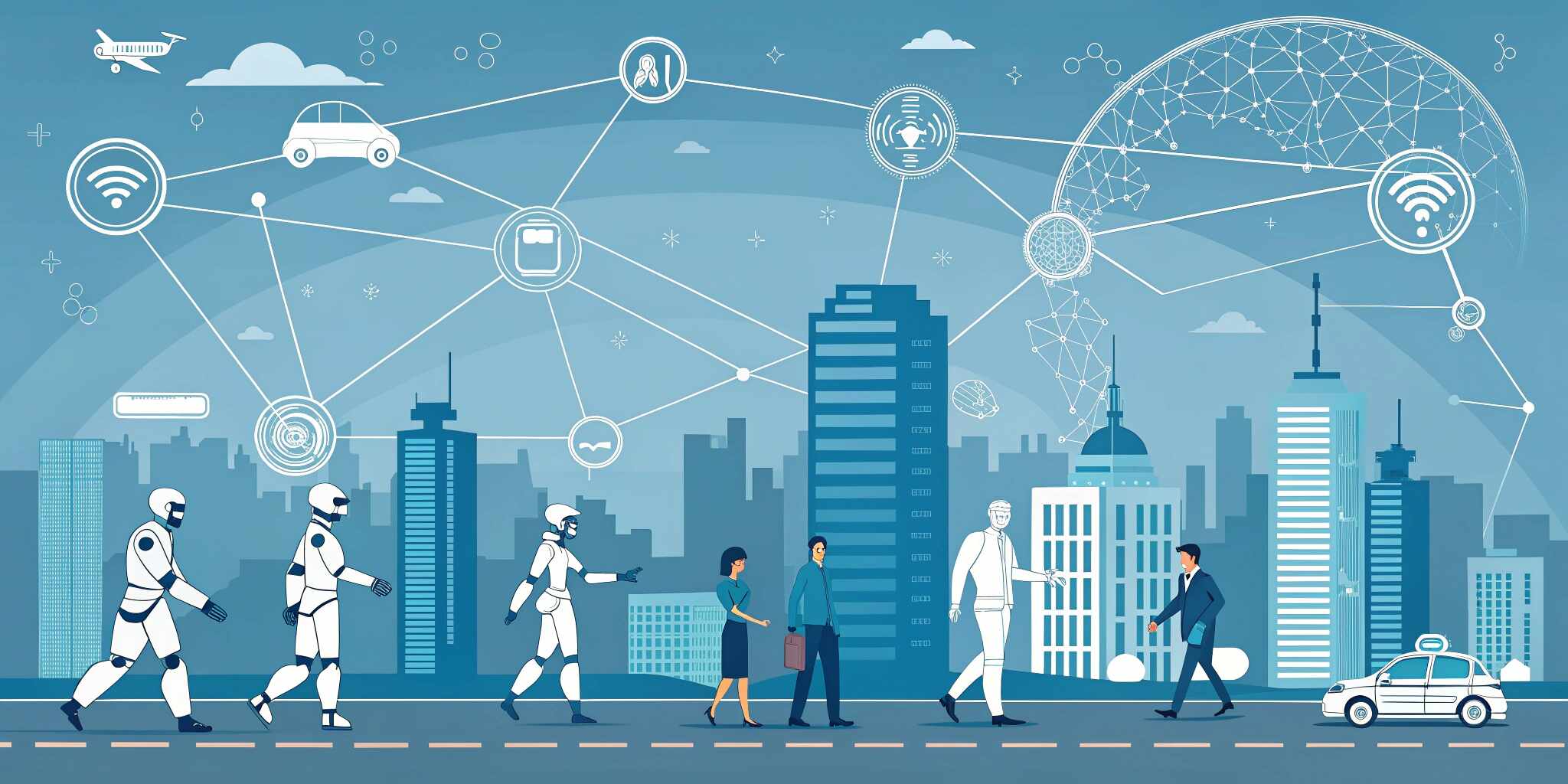
Today, that paradigm is rapidly changing. The emergence of Artificial Intelligence, Large Language Models (LLMs), machine learning, and agent-based architectures has given rise to a new generation of software known as Autonomous Applications. These systems can perceive information, make decisions, execute tasks, learn from outcomes, and continuously improve with minimal human intervention.
As organizations increasingly seek efficiency, scalability, and intelligent automation, autonomous applications are becoming a key driver of digital transformation.
What Are Autonomous Applications?
Autonomous applications are software systems capable of independently performing tasks, making decisions, and adapting to changing conditions without requiring constant human guidance.
Unlike traditional applications that rely on fixed workflows, autonomous applications use AI technologies to:
- Understand context
- Analyze data
- Generate insights
- Make decisions
- Execute actions
- Learn from feedback
These systems move beyond simple automation and become active participants in business operations.
Examples include:
- AI customer support agents
- Autonomous research assistants
- Intelligent recommendation systems
- AI-powered cybersecurity platforms
- Self-optimizing marketing campaigns
- Autonomous supply chain management systems
Their ability to operate independently distinguishes them from conventional software applications.
Why Autonomous Applications Are Rising
Several technological advancements have accelerated the growth of autonomous applications.
1. Large Language Models (LLMs)
Modern LLMs can understand natural language, reason through complex problems, generate content, and interact with users conversationally.
These capabilities allow applications to process information and make decisions in ways that were previously impossible.
2. Agentic AI Frameworks
Frameworks such as LangGraph, AutoGen, CrewAI, and agent-based orchestration platforms enable AI systems to coordinate multiple tasks and collaborate across workflows.
This creates applications capable of handling complex objectives autonomously.
3. Cloud Computing
Scalable cloud infrastructure provides the computational power necessary to run AI models, process large datasets, and support real-time decision-making.
4. Advanced Data Availability
Organizations now collect massive amounts of structured and unstructured data.
Autonomous systems leverage this information to improve accuracy and performance continuously.
Key Characteristics of Autonomous Applications
Context Awareness
Autonomous applications understand user intent, environmental conditions, and operational context.
Instead of simply following commands, they interpret situations before taking action.
Continuous Learning
Machine learning algorithms allow these systems to improve over time by analyzing outcomes and adjusting strategies.
Goal-Oriented Behavior
Rather than executing individual commands, autonomous applications focus on achieving broader objectives.
For example:
Traditional software:
- Send marketing emails.
Autonomous application:
- Analyze customer behavior.
- Determine best audience.
- Generate content.
- Schedule campaigns.
- Optimize performance.
Self-Correction
These systems can detect errors, adapt workflows, and recover from failures without requiring manual intervention.
Core Technologies Behind Autonomous Applications
Several technologies work together to power autonomous systems.
Artificial Intelligence
AI enables reasoning, prediction, and intelligent decision-making.
Machine Learning
ML models identify patterns and improve performance through experience.
Natural Language Processing (NLP)
NLP allows applications to understand and generate human language.
Knowledge Graphs
Knowledge graphs provide contextual understanding and relationship mapping between data entities.
Agent Frameworks
AI agents coordinate tasks, tools, APIs, and workflows to achieve objectives efficiently.
Real-World Applications
Customer Support
AI-powered support agents can:
- Answer questions
- Resolve issues
- Escalate cases
- Learn from interactions
This improves customer satisfaction while reducing operational costs.
Healthcare
Autonomous systems assist healthcare providers by:
- Analyzing patient data
- Identifying risk factors
- Suggesting treatment options
- Monitoring health trends
Cybersecurity
AI security platforms continuously monitor networks, detect threats, and respond to attacks in real time.
Financial Services
Banks and fintech companies use autonomous applications for:
- Fraud detection
- Risk assessment
- Portfolio management
- Customer service automation
Software Development
AI coding assistants can:
- Generate code
- Debug applications
- Perform testing
- Suggest optimizations
This significantly increases developer productivity.
Benefits of Autonomous Applications
Increased Efficiency
Tasks that previously required hours of manual effort can now be completed in minutes.
Scalability
Autonomous systems can manage growing workloads without proportional increases in human resources.
Faster Decision-Making
Real-time analysis enables rapid responses to changing business conditions.
Reduced Costs
Automation decreases operational expenses while improving productivity.
Enhanced User Experience
Personalized recommendations and intelligent interactions create more engaging customer experiences.
Challenges and Risks
Despite their potential, autonomous applications introduce several challenges.
Trust and Transparency
Organizations must understand how AI systems arrive at decisions.
Explainable AI is becoming increasingly important.
Security Concerns
Autonomous systems often access sensitive data and critical business processes.
Strong security controls are essential.
Ethical Considerations
AI-driven decisions may introduce bias if training data is flawed.
Regular monitoring and governance are necessary.
Regulatory Compliance
Industries such as healthcare, finance, and government must comply with strict regulations regarding AI usage and decision-making.
The Future of Autonomous Applications
The next generation of software will likely consist of interconnected autonomous agents collaborating to achieve business objectives.
Future developments may include:
- Fully autonomous digital workers
- AI-managed business operations
- Self-healing software systems
- Autonomous software engineering teams
- Intelligent enterprise ecosystems
Organizations that adopt these technologies early will gain significant competitive advantages through faster innovation, improved efficiency, and enhanced customer experiences.
Conclusion
Autonomous applications represent a fundamental shift in how software is designed and used. Moving beyond traditional automation, these systems can reason, adapt, learn, and execute tasks independently. Powered by advancements in AI, machine learning, and agentic architectures, autonomous applications are transforming industries ranging from healthcare and finance to customer service and software development.
While challenges related to governance, security, and ethics remain, the benefits are undeniable. As technology continues to evolve, autonomous applications will become an integral part of modern business operations, ushering in a future where software is no longer just a tool—but an intelligent partner capable of driving outcomes and creating value on its own.