Introduction
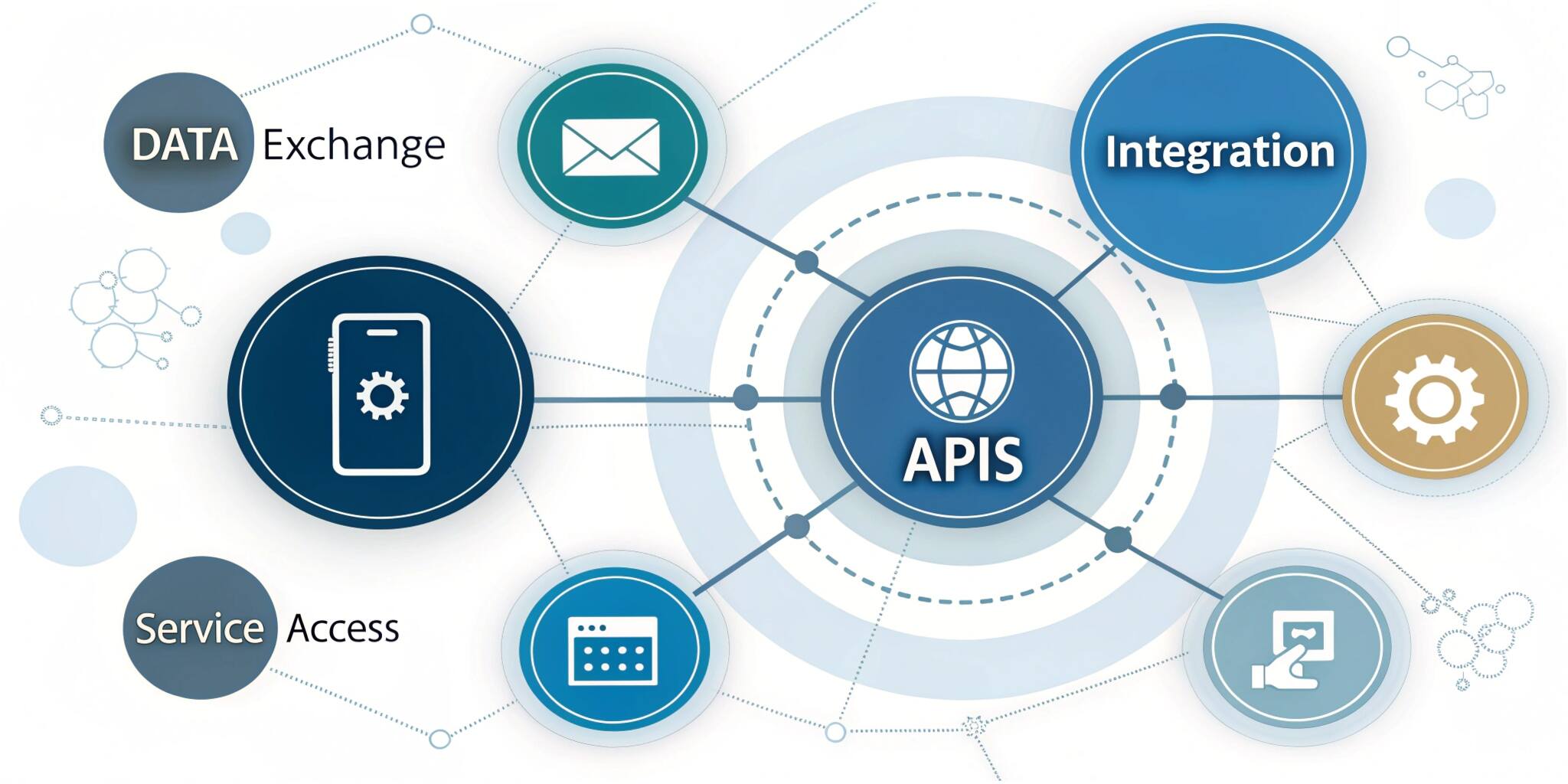
In a world increasingly driven by digital experiences, application programming interfaces (APIs) have become the unsung heroes. They quietly power everything from your food delivery app to your smart home device, enabling seamless integration and data exchange between systems. But what exactly is their role in modern app ecosystems?
What Are APIs?
APIs are sets of rules and protocols that allow one software application to communicate with another. Think of them as digital bridges—connecting apps, devices, and services in ways that are fast, secure, and scalable.
Key Roles of APIs in Modern App Ecosystems
1. Seamless Integration Across Platforms
APIs enable cross-platform functionality by allowing apps to communicate with external services like payment gateways, authentication providers, cloud services, or analytics tools.
2. Accelerated Development Cycles
Rather than building every feature from scratch, developers can use APIs to integrate ready-made functionalities, speeding up time-to-market and reducing costs.
3. Scalability and Flexibility
Modern apps are built to grow. APIs allow developers to scale functionalities by adding or replacing services without overhauling the entire codebase.
4. Enabling Ecosystem Expansion
APIs encourage ecosystem growth. Think of platforms like Shopify or Salesforce—third-party developers can build apps that plug directly into their ecosystems via well-documented APIs.
5. Enhancing User Experience
From real-time tracking in logistics apps to personalized recommendations in eCommerce, APIs fetch dynamic data that makes user experiences richer and more interactive.
Real-World Examples
- Stripe: Provides a powerful API to integrate payment solutions in mobile and web applications.
- Google Maps API: Helps apps embed geolocation and mapping services effortlessly.
- Slack & Zapier: Offer public APIs that let businesses create complex workflows with minimal coding.
Security Considerations
With great power comes great responsibility. Securing APIs through authentication (OAuth2, JWT), rate limiting, and encryption is crucial to protect data integrity and privacy.
The Future of APIs
As microservices and serverless architectures grow, APIs will play an even more central role. Technologies like GraphQL, gRPC, and API gateways are evolving the way developers structure and manage APIs for optimal performance.
Conclusion
APIs are no longer optional; they’re foundational. Whether you’re building a mobile app, a web dashboard, or an enterprise SaaS platform, APIs empower your ecosystem to be more agile, connected, and innovative. In today’s digital landscape, mastering API integration is essential for staying competitive.