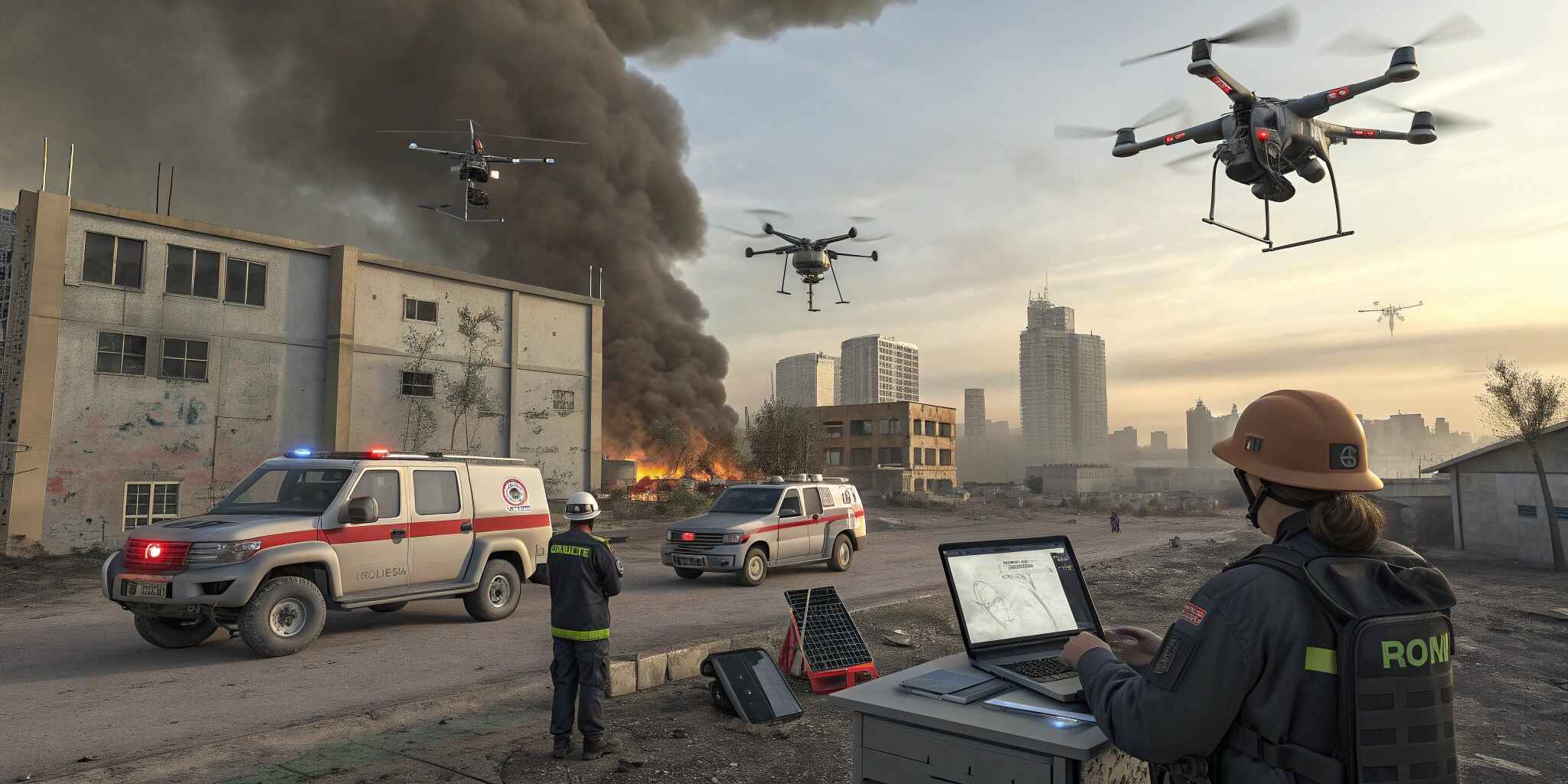
Disasters—whether natural or human-made—strike without warning, leaving communities vulnerable and systems overwhelmed. In these moments, rapid communication, quick decision-making, and accurate information can save thousands of lives. This is where Information Technology (IT) plays a crucial role. From early warning systems to post-disaster recovery, IT is the backbone of modern disaster management, strengthening global resilience and response capabilities.
Today, governments, humanitarian organizations, and emergency responders depend on powerful digital tools to track hazards, analyze risks, coordinate operations, and deliver life-saving information in real time.
1. Early Warning Systems Powered by IT
One of the most significant contributions of IT to disaster management is the development of early warning systems. These systems combine weather satellites, sensor networks, ocean buoys, seismic detectors, and data analytics to predict disasters like cyclones, earthquakes, floods, and tsunamis.
Technologies such as:
- Remote sensing
- IoT sensors
- Predictive analytics
- AI-powered forecasting models
allow authorities to issue timely warnings, giving people precious time to evacuate and prepare. SMS alerts, mobile notifications, and real-time broadcasts reduce emergencies drastically by providing fast and accurate alerts.
2. GIS Mapping and Real-Time Data Visualization
Geographic Information Systems (GIS) have become essential for disaster planning and response. GIS maps help visualize affected areas, understand risk zones, and predict the extent of damage.
IT-powered GIS tools allow responders to:
- Map flood zones
- Track storm movement
- Identify evacuation routes
- Locate critical infrastructure
- Allocate resources effectively
During emergencies, real-time data visualization allows decision-makers to see what’s happening on the ground, improving the accuracy of response efforts.
3. Communication Systems for Coordination and Response
Clear and uninterrupted communication is critical during crises. IT ensures smooth communication through:
- Emergency broadcasting networks
- Satellite phones
- Mobile radio systems
- Cloud communication platforms
- Social media alerts
These systems help coordinate teams, track resource distribution, and maintain communication with the public—even when traditional networks fail.
In many disaster-hit areas, IT-enabled mobile apps help citizens report injuries, blocked roads, or collapsed structures, enabling faster rescue operations.
4. Artificial Intelligence and Predictive Analytics
AI is revolutionizing the way experts understand and respond to disasters. Machine learning algorithms analyze historical data, climate patterns, and seismic activity to predict potential hazards with improved accuracy.
AI assists in:
- Identifying high-risk zones
- Forecasting storm intensity
- Detecting anomalies
- Optimizing relief logistics
- Prioritizing rescue operations
AI-powered drones and robots play a growing role by assessing inaccessible areas, delivering supplies, and locating survivors through thermal imaging.
5. Cloud Computing and Centralized Data Sharing
Disaster management requires seamless collaboration across multiple agencies. Cloud computing creates a centralized platform for real-time data sharing among governments, NGOs, emergency responders, and global organizations.
Cloud platforms support:
- Remote access to crisis data
- High-speed information exchange
- Digital documentation of relief work
- Scalable storage for huge datasets
This improves decision-making, reduces duplication of efforts, and speeds up recovery operations.
6. Role of IT in Recovery and Rehabilitation
After the immediate crisis, IT continues to support recovery. Digital systems help track relief aid, monitor rehabilitation progress, and distribute financial assistance fairly.
Technologies like drones, 3D mapping, and satellite imagery assess damage, enabling governments to plan reconstruction strategically. Data analytics also helps identify long-term risks and vulnerabilities, guiding stronger infrastructure development.
7. Challenges and the Need for Stronger IT Infrastructure
Despite its advantages, IT-driven disaster management faces challenges including:
- Digital divide in developing regions
- Cybersecurity threats
- Lack of robust infrastructure
- Limited training among responders
Improving global digital capacity is essential for ensuring every nation can benefit from modern disaster technologies.
Conclusion
Information Technology has become a lifeline in disaster management and emergency response. From predicting hazards to coordinating rescue teams and supporting long-term recovery, IT plays a vital role in saving lives and strengthening community resilience. As technology advances—with AI, IoT, cloud systems, and real-time analytics—the world is moving toward a future where disasters can be managed with greater efficiency, accuracy, and preparedness.