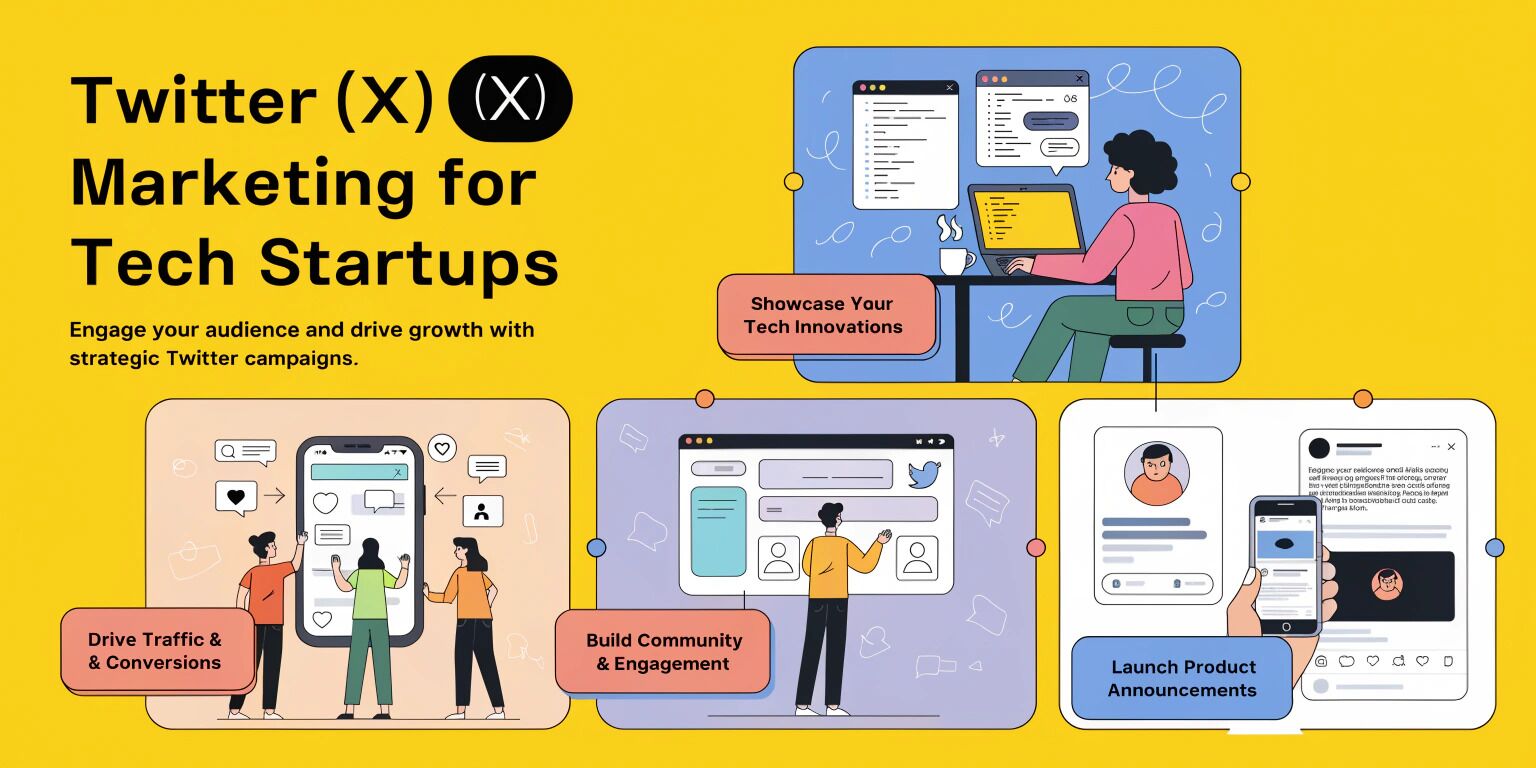
For technology startups, building awareness is often just as challenging as building the product itself. Limited marketing budgets, strong competition, and constantly changing customer expectations make it difficult for emerging companies to stand out.
Twitter, now known as X, can provide startups with a direct way to communicate with founders, developers, investors, technology leaders, potential customers, and industry communities.
Unlike traditional advertising channels, X allows startups to participate in conversations, demonstrate expertise, share product updates, and build relationships without relying entirely on large advertising budgets.
However, successful X marketing requires more than posting promotional messages. Startups need a clear strategy built around valuable content, authentic engagement, and consistent positioning.
Why X Marketing Matters for Tech Startups
Technology audiences are highly active in online conversations about products, trends, programming, artificial intelligence, cybersecurity, SaaS, cloud computing, and emerging technologies.
A strong X presence can help startups:
- Build brand awareness
- Establish credibility
- Generate website traffic
- Attract potential customers
- Build industry relationships
- Promote product launches
- Recruit talent
- Develop communities
- Generate business opportunities
For early-stage startups, the platform can also provide valuable feedback directly from users and industry professionals.
Define Your Target Audience
Before creating content, identify who you want to reach.
A technology startup might target:
- CTOs
- Developers
- Startup founders
- Product managers
- IT managers
- Business owners
- Investors
- Enterprise decision-makers
Different audiences require different messaging.
For example, developers may respond to technical tutorials and product documentation, while business decision-makers may be more interested in ROI, efficiency, and case studies.
Build a Strong Startup Profile
Your X profile should communicate your value proposition quickly.
Important elements include:
- Clear company name
- Professional profile image
- Concise description
- Website link
- Relevant keywords
- Consistent brand identity
- Pinned post
The pinned post can introduce your product, explain your mission, showcase an important announcement, or direct visitors toward a valuable resource.
Use Founder-Led Marketing
Founder-led marketing can be especially effective for startups.
People often connect more easily with individuals than corporate accounts.
Startup founders can share:
- Lessons from building the company
- Product development experiences
- Industry opinions
- Customer insights
- Startup challenges
- Technology observations
- Product decisions
This humanizes the brand and creates a stronger connection with the audience.
Founder content should provide genuine insights rather than becoming a continuous stream of promotional posts.
Create Educational Content
Educational content helps startups demonstrate expertise.
Useful formats include:
- Technical tips
- Industry insights
- How-to threads
- Product tutorials
- Research findings
- Technology comparisons
- Data-driven observations
- Common mistakes
- Short case studies
For example, an AI startup could explain practical approaches to reducing inference costs instead of repeatedly posting "Our AI platform is powerful."
Educational content gives people a reason to follow the account.
Participate in Industry Conversations
Social media marketing should not be one-way communication.
Startups should actively participate in relevant conversations.
This includes:
- Replying to industry experts
- Answering technical questions
- Joining discussions
- Sharing useful perspectives
- Supporting community members
- Commenting on industry developments
Thoughtful replies can sometimes generate more visibility than standalone posts.
Promote Products Without Over-Selling
Product promotion is important, but excessive promotional content can reduce engagement.
A useful content mix might include:
Educational Content: Teach something valuable.
Industry Content: Discuss trends and developments.
Community Content: Engage with your audience.
Product Content: Demonstrate how your solution works.
Social Proof: Share customer outcomes and testimonials.
The goal is to make promotional content feel like useful information rather than advertising.
Use Threads for Complex Topics
Technology concepts can be difficult to explain in a single post.
Threads can break complex subjects into smaller pieces.
For example:
"How We Reduced API Latency by 40%"
A thread could explain:
- The original problem
- Performance bottlenecks
- Investigation process
- Technical changes
- Results
- Lessons learned
This format demonstrates expertise while creating valuable educational content.
Build a Technology Community
Successful startups do not simply build audiences; they build communities.
Encourage discussions around:
- Industry challenges
- Developer experiences
- Product feedback
- Technology trends
- Startup lessons
Ask meaningful questions and respond to comments.
Community building can create a network of people who naturally share and recommend your product.
Use Social Listening
Monitor conversations related to your industry, competitors, technologies, and customer problems.
Social listening can reveal:
- Common customer complaints
- Emerging trends
- Competitor weaknesses
- New market opportunities
- Frequently requested features
For example, if developers repeatedly complain about a particular workflow problem, a startup may discover an opportunity to create content or develop a solution around it.
Hashtag Strategy
Hashtags can help categorize content, but excessive hashtag usage can make posts appear promotional.
Use a small number of highly relevant hashtags when they genuinely improve discoverability.
Technology startups might focus on specific topics such as:
- AI
- SaaS
- Cloud Computing
- Cybersecurity
- Web Development
- Startup Technology
The exact strategy should be based on audience behavior rather than simply adding popular hashtags.
Use Visual Content
Technology concepts can benefit from visual communication.
Startups can publish:
- Product screenshots
- Architecture diagrams
- Data visualizations
- Short videos
- Product demonstrations
- Infographics
- Before-and-after comparisons
Visual content can make technical information easier to understand and share.
Generate Leads Through X
Social media should ultimately contribute to business objectives.
Potential lead-generation tactics include:
- Linking to landing pages
- Promoting webinars
- Offering technical resources
- Sharing case studies
- Inviting users to product demos
- Promoting free trials
- Starting conversations with potential buyers
Avoid aggressive unsolicited outreach. Start conversations by providing relevant value.
Measure Marketing Performance
Track performance regularly using metrics such as:
- Follower growth
- Engagement rate
- Post impressions
- Website clicks
- Profile visits
- Leads generated
- Conversion rate
- Content engagement
- Referral traffic
The most important metric depends on the startup's objective.
A new startup may prioritize awareness, while a growth-stage company may focus more heavily on qualified leads and conversions.
Common Mistakes to Avoid
Tech startups should avoid:
- Posting only promotional content
- Ignoring comments
- Copying competitors
- Using excessive automation
- Chasing every trend
- Posting inconsistently
- Focusing only on follower count
- Ignoring audience feedback
- Using overly technical language for business audiences
Consistency and relevance are more valuable than simply increasing posting frequency.
Conclusion
Twitter (X) can be a powerful marketing channel for technology startups when it is approached as a platform for conversation, education, community building, and thought leadership rather than simply advertising.
By combining founder-led content, technical insights, product storytelling, meaningful engagement, social listening, and performance measurement, startups can build credibility and attract the right audience.
The strongest X strategies focus on providing value consistently. Over time, valuable conversations can become relationships, relationships can become leads, and qualified leads can become long-term customers.