As software applications grow more complex and teams adopt faster development cycles, traditional deployment methods often struggle to keep up. Differences between development, testing, and production environments can cause unexpected issues, leading to delays and frustration. Containerization emerged as a solution to these challenges, and Docker has become the most popular tool for implementing it. Understanding containerization with Docker is an essential skill for beginners entering modern software development and DevOps.
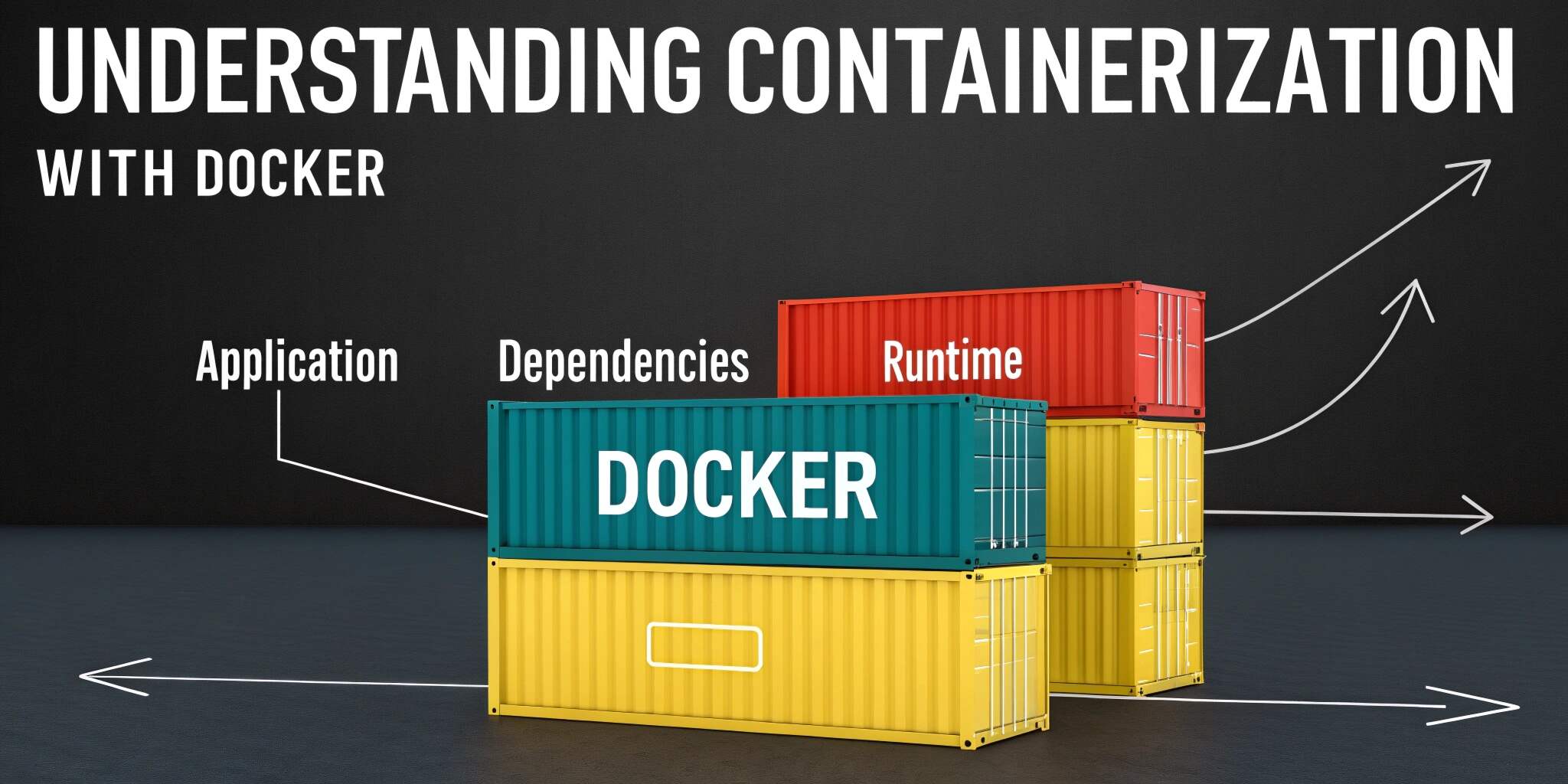
Containerization is a method of packaging an application along with all its dependencies, libraries, and configurations into a single unit called a container. This container can run consistently across different environments, regardless of the underlying operating system or infrastructure. Unlike virtual machines, containers share the host system’s kernel, making them lightweight, faster to start, and more resource-efficient.
Docker simplifies containerization by providing tools to build, run, and manage containers. A Docker image acts as a blueprint for creating containers. It contains everything needed to run an application, including code, runtime, system tools, and dependencies. Once an image is created, it can be shared and reused across teams, ensuring consistency and reducing setup time.
One of the key advantages of Docker is environment consistency. Developers often face issues where applications work perfectly on their local machines but fail in production. Docker eliminates this problem by ensuring that the same container runs everywhere. This consistency improves reliability and reduces deployment-related bugs.
Docker also enhances scalability and flexibility. Containers can be easily started, stopped, or replicated, making it simpler to scale applications based on demand. This is particularly useful for microservices architectures, where applications are broken into smaller, independent services. Docker allows each service to run in its own container, enabling faster updates and independent scaling.
Another important benefit of Docker is its role in DevOps and CI/CD pipelines. Docker integrates seamlessly with automation tools, enabling teams to build, test, and deploy applications more efficiently. Automated pipelines can use Docker images to ensure consistent testing environments, reducing errors and speeding up release cycles.
Security is another area where Docker provides advantages. Containers isolate applications from one another, limiting the impact of potential vulnerabilities. While container security still requires best practices such as image scanning and access control, Docker provides a strong foundation for building secure systems.
For beginners, learning Docker starts with understanding core concepts such as Dockerfiles, images, and containers. A Dockerfile is a script that defines how an image is built. It specifies the base image, dependencies, and commands required to run the application. Once created, Docker uses this file to build an image that can be deployed anywhere.
Docker also supports container orchestration through tools like Docker Compose and Kubernetes. Docker Compose allows developers to define and manage multi-container applications locally, while orchestration platforms handle large-scale deployments in production environments. These tools further extend Docker’s capabilities and make it suitable for complex systems.
Despite its advantages, Docker is not a replacement for all deployment methods. Beginners should understand when containerization is appropriate and how it fits into broader system architecture. Learning Docker is most effective when combined with an understanding of cloud computing, networking, and application design principles.
In conclusion, containerization with Docker has become a cornerstone of modern software development. It solves common deployment challenges by providing consistency, portability, and scalability across environments. For beginners, mastering Docker opens the door to DevOps practices, cloud-native development, and efficient application deployment. As technology continues to evolve, Docker remains a valuable tool for building reliable and scalable software systems.