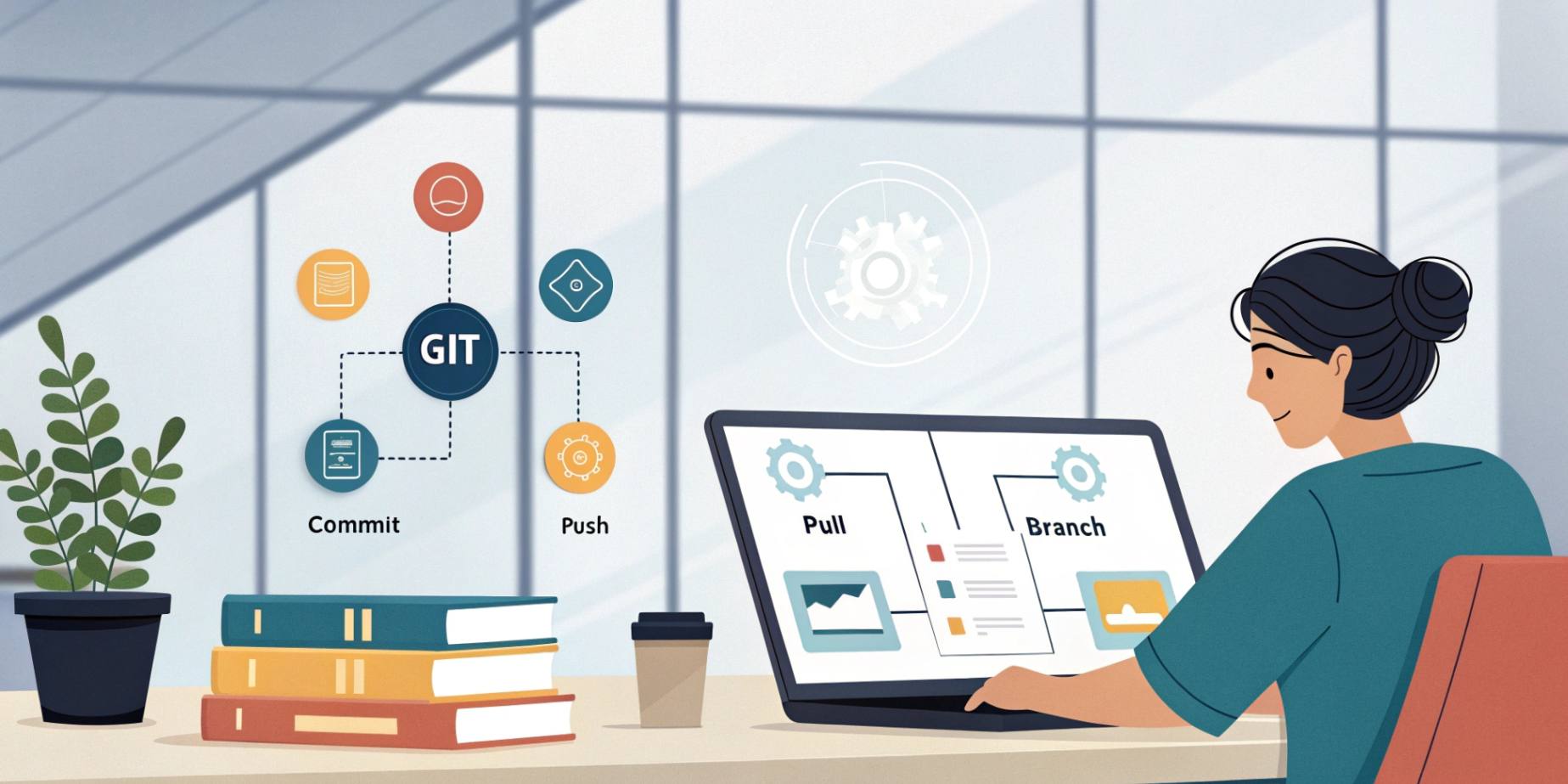
In today’s fast-moving software development ecosystem, managing code efficiently is essential for building reliable and scalable applications. Among the many tools available, Git stands out as the most widely used and trusted version control system. Developers across the world rely on Git to manage their codebase, track changes, collaborate seamlessly, and maintain a clean and organized workflow. Whether you are working as an individual developer or as part of a large engineering team, Git has become an indispensable companion in every stage of development.
At its core, Git is a distributed version control system that records changes in your code over time. This allows developers to revert to previous versions, compare changes, or fix mistakes without losing progress. The ability to track every modification provides a sense of security, especially when working on complex features or experimenting with new ideas. Instead of worrying about breaking the entire project, developers can confidently work in isolated branches while keeping the main codebase stable.
One of the biggest advantages of Git is its powerful branching and merging capabilities. Branches allow developers to work on new features, bug fixes, or experiments independently from the main project. This isolation ensures that the production-ready code is never disrupted. When the work is complete, Git makes it easy to merge changes back into the main branch. This workflow not only keeps the code clean but also encourages parallel development, enabling multiple developers to work simultaneously without interfering with one another.
Collaboration is another area where Git truly shines. Platforms like GitHub, GitLab, and Bitbucket use Git as their foundation to help teams manage their repositories and coordinate efficiently. Developers can submit pull requests or merge requests, allowing teammates to review, comment on, and improve the code before it becomes part of the main project. This review process increases code quality, prevents bugs from slipping through, and promotes shared ownership among the team. It also encourages communication and learning, as developers gain insights from each other’s approaches and solutions.
Git also helps maintain transparency across the project. Every change made to a file is recorded in Git’s commit history, showing who made the change, when it was made, and why it was done. This level of documentation is invaluable when debugging issues or understanding the evolution of a project. A clear history allows developers to trace back to the exact moment a bug was introduced or analyze how certain features were built in the past. This structured traceability enhances accountability and ensures a more organized development environment.
Another significant benefit of Git lies in its efficient handling of large projects and distributed teams. Since Git is distributed, every developer has a complete copy of the repository on their local machine. This means they can work offline, commit changes locally, and sync with the remote repository whenever internet access is available. This functionality ensures uninterrupted productivity, regardless of location or connectivity. It also reduces dependency on a central server, making Git fast, reliable, and secure.
Git also integrates seamlessly with modern DevOps practices. Continuous integration and continuous deployment (CI/CD) pipelines often begin with Git commits or pull requests. Automated testing, code linting, security checks, and deployments can all be triggered directly from Git-based workflows. This automation reduces manual errors, speeds up delivery, and ensures consistent quality across releases. Git acts as the backbone of a smooth DevOps pipeline, connecting coding efforts with deployment processes.
Finally, Git encourages developers to adopt good coding habits. Writing clear commit messages, structuring work into manageable chunks, and maintaining organized branches all contribute to cleaner, more maintainable code. These practices not only improve individual productivity but also make it easier for teams to collaborate effectively on long-term projects.
In conclusion, Git has earned its reputation as a developer’s best friend because it simplifies code management, enhances collaboration, ensures transparency, and supports modern development workflows. Its powerful features, combined with its flexibility and reliability, make it an essential tool for every developer—beginner or expert. As software development continues to evolve, Git will remain at the heart of successful, efficient, and organized programming practices.