Main Content
Vision OS and iOS Integration: Opportunities for Developers
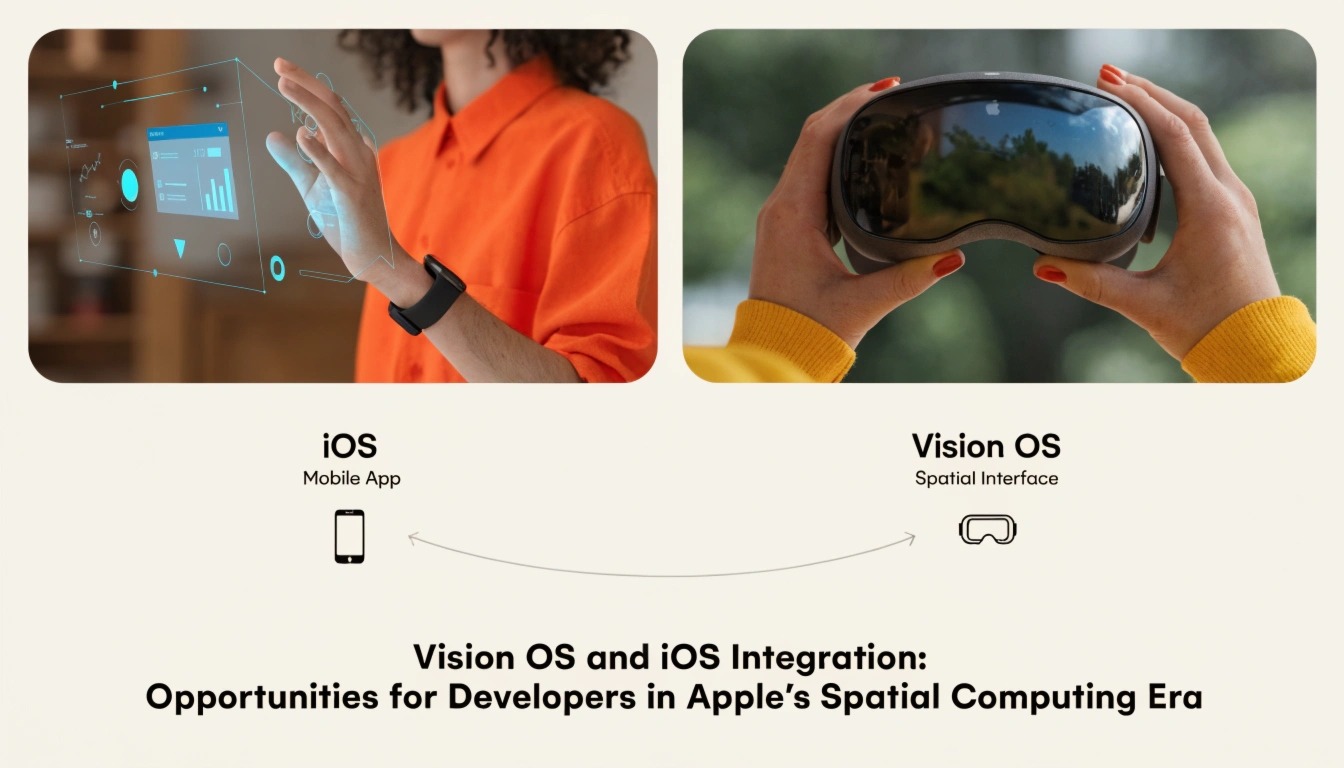
Apple's introduction of Vision OS with the Apple Vision Pro marks a significant milestone in the evolution of spatial computing. Rather than creating an isolated platform, Apple has designed Vision OS to work closely with iOS, allowing developers to leverage their existing knowledge and codebases to create immersive and interactive experiences.
This seamless integration presents exciting opportunities for developers looking to expand beyond traditional mobile applications and embrace the future of mixed reality.
Understanding Vision OS
Vision OS is Apple's operating system designed specifically for spatial computing devices like Apple Vision Pro. It combines digital content with the physical world, enabling users to interact with applications using their eyes, hands, and voice.
Unlike traditional interfaces, Vision OS introduces three-dimensional environments where applications can coexist naturally within the user's surroundings. This creates a completely new way for users to consume content and interact with software.
Shared Development Frameworks
One of the biggest advantages for developers is that Vision OS shares many frameworks with iOS. Existing iOS developers can quickly adapt to Vision OS using familiar tools and technologies such as:
- SwiftUI
- Xcode
- ARKit
- RealityKit
- Combine
- UIKit (with compatibility support)
This shared ecosystem significantly reduces the learning curve and allows teams to reuse large portions of their existing code.
Cross-Platform Development Benefits
Developers can create applications that work across multiple Apple devices with minimal modifications. A single codebase can support:
- iPhone
- iPad
- Mac
- Apple Watch
- Apple Vision Pro
This approach reduces development costs, shortens release cycles, and improves consistency across platforms.
Enhanced User Experiences
Vision OS enables developers to design immersive experiences that extend beyond traditional screens. Applications can occupy three-dimensional spaces and interact naturally with users.
Examples include:
Productivity Applications
Users can arrange multiple windows in their physical environment, making multitasking more efficient. Existing iOS productivity apps can be enhanced with spatial interfaces to create more engaging workspaces.
Entertainment Platforms
Streaming services and media applications can provide cinematic viewing experiences with virtual screens and immersive environments.
Education and Training
Educational apps can present complex concepts through interactive 3D models, making learning more engaging and effective.
Healthcare Applications
Medical professionals can visualize anatomical structures, review patient data, and conduct simulations in immersive environments.
Opportunities for Game Developers
Game developers stand to benefit significantly from Vision OS integration. By combining ARKit and RealityKit with powerful graphics capabilities, studios can build immersive gaming experiences that blend virtual objects with the real world.
Developers familiar with iOS gaming frameworks can extend their games into spatial environments without starting from scratch.
Potential gaming innovations include:
- Interactive mixed reality environments.
- Hand gesture-based controls.
- Multiplayer spatial experiences.
- Immersive storytelling.
- Advanced object recognition and tracking.
Enterprise Applications
Businesses are increasingly exploring spatial computing solutions. Vision OS offers opportunities for developers to create enterprise applications for:
- Remote collaboration.
- Product visualization.
- Virtual meetings.
- Employee training.
- Industrial simulations.
- Data analysis and visualization.
Companies investing in Apple's ecosystem can benefit from seamless synchronization between Vision Pro and iOS devices.
SwiftUI Accelerates Development
SwiftUI plays a central role in Vision OS development. Since many iOS developers already use SwiftUI, transitioning to Vision OS becomes easier.
Developers can build adaptive interfaces that automatically adjust to different devices and environments. This ensures consistency and enhances user experiences across Apple's ecosystem.
Challenges Developers Should Consider
Although Vision OS creates many opportunities, developers should also address certain challenges:
- Designing interfaces for three-dimensional environments.
- Optimizing performance for immersive experiences.
- Understanding spatial interactions.
- Managing battery and resource consumption.
- Creating intuitive user experiences.
Investing time in learning Apple's Human Interface Guidelines will be essential for creating successful Vision OS applications.
The Future of Apple's Ecosystem
Vision OS represents the next phase of computing. As Apple continues to expand spatial computing capabilities, developers who adopt the platform early will gain a competitive advantage.
The close integration between Vision OS and iOS allows developers to innovate while leveraging their existing skills and codebases. From gaming and healthcare to education and enterprise solutions, the possibilities are virtually limitless.
As spatial computing becomes more mainstream, Vision OS and iOS integration will redefine how applications are built and experienced, opening a new chapter in software development and digital interaction.