For many IT agencies and web development companies, project-based income can create inconsistent cash flow and unpredictable business growth. While building websites generates immediate revenue, relying solely on one-time projects often makes scaling difficult.
To solve this challenge, many successful digital agencies have adopted a highly profitable recurring revenue strategy: website maintenance contracts.
Website maintenance services provide ongoing support, security, updates, monitoring, and optimization for clients after a website is launched. Although often overlooked, maintenance contracts have become one of the most stable and scalable revenue models in the web development industry.
Instead of continuously searching for new clients every month, agencies create long-term partnerships that generate predictable recurring income while improving client retention.
This blog explores why website maintenance contracts are considered a hidden revenue model and how IT agencies successfully use them to build sustainable growth.
Why Website Maintenance Matters
Modern websites are not “build once and forget forever” products.
Websites require continuous maintenance to ensure:
- Security
- Performance
- Compatibility
- Reliability
- SEO health
- User experience
Without regular maintenance, websites become vulnerable to:
- Cyberattacks
- Broken functionality
- Slow loading speeds
- Plugin conflicts
- Downtime
- Search engine ranking drops
Businesses increasingly recognize the importance of ongoing website management.
The Shift from Projects to Recurring Revenue
Traditional web development businesses often depend on:
- One-time website projects
- Irregular client work
- Unpredictable income cycles
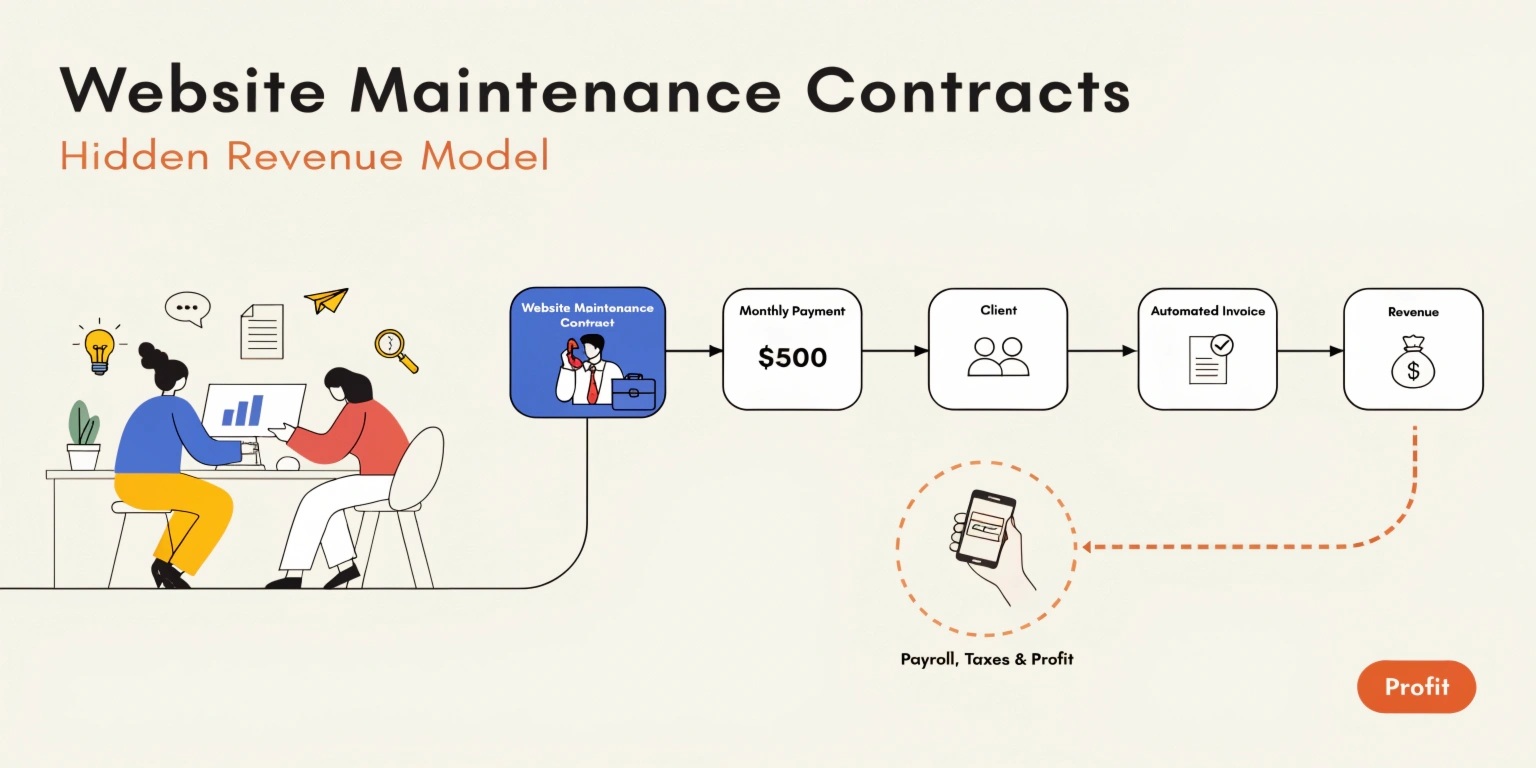
Maintenance contracts transform this model into predictable monthly or yearly recurring revenue.
Benefits of Recurring Revenue
- Stable cash flow
- Improved business forecasting
- Better financial planning
- Higher client retention
- Long-term customer relationships
- Reduced dependency on new sales
Many agencies eventually generate a significant portion of their profits from maintenance plans alone.
What Website Maintenance Contracts Include
Website maintenance services can vary depending on business requirements.
Common Services Included
Security Monitoring
Protecting websites from malware, hacking attempts, and vulnerabilities.
Software Updates
Updating:
- CMS platforms
- Plugins
- Themes
- APIs
- Server software
Website Backups
Regular backups ensure disaster recovery.
Performance Optimization
Improving speed, caching, and responsiveness.
Uptime Monitoring
Tracking website availability and outages.
Technical Support
Providing ongoing troubleshooting and assistance.
SEO Maintenance
Fixing technical SEO issues and improving search visibility.
Agencies often bundle these services into monthly plans.
Why Clients Prefer Maintenance Contracts
Many business owners lack the technical expertise or time to manage websites themselves.
Maintenance contracts provide:
- Peace of mind
- Reduced downtime risks
- Faster issue resolution
- Better website performance
- Ongoing technical support
Clients increasingly prefer managed service models because they reduce operational complexity.
Pricing Models for Maintenance Contracts
Successful agencies use multiple pricing strategies.
1. Fixed Monthly Plans
The most common model.
Clients pay a recurring monthly fee for predefined services.
Advantages
- Predictable revenue
- Easier budgeting
- Long-term retention
2. Tiered Maintenance Packages
Different service levels based on client needs.
Example Tiers
Basic Plan
- Updates
- Security checks
- Monthly backups
Standard Plan
- Performance optimization
- SEO monitoring
- Technical support
Premium Plan
- Dedicated support
- Advanced monitoring
- Priority issue resolution
Tiered pricing increases upselling opportunities.
3. Hourly Retainer Contracts
Clients purchase a fixed number of support hours monthly.
This model works well for:
- Enterprise clients
- Custom development support
- Ongoing feature enhancements
The Business Value for IT Agencies
Website maintenance contracts create several long-term business advantages.
Predictable Monthly Income
Recurring payments improve financial stability.
Higher Client Lifetime Value
Agencies maintain long-term relationships instead of one-time transactions.
Easier Upselling Opportunities
Maintenance clients are more likely to purchase:
- SEO services
- Mobile apps
- Redesigns
- Marketing solutions
- Cloud services
Reduced Customer Acquisition Pressure
Recurring clients reduce dependency on constant lead generation.
Automation and Scalable Maintenance Systems
Modern agencies use automation tools to manage large numbers of maintenance clients efficiently.
Common Automation Tools
- Cloudflare for CDN and security
- ManageWP for website management
- Sucuri for malware protection
- Datadog for uptime monitoring
Automation helps agencies:
- Reduce manual work
- Improve scalability
- Increase profit margins
Website Security as a Revenue Driver
Cybersecurity concerns are rapidly increasing.
Businesses now prioritize:
- SSL management
- Firewall protection
- Malware scanning
- Vulnerability monitoring
Agencies offering security-focused maintenance plans create additional value and justify premium pricing.
Client Retention Through Ongoing Support
Maintenance contracts naturally strengthen client relationships.
Frequent communication and ongoing support improve:
- Customer trust
- Loyalty
- Retention rates
- Referral opportunities
Satisfied maintenance clients often become long-term business partners.
Challenges in Managing Maintenance Contracts
Although profitable, maintenance services introduce operational challenges.
Common Challenges
- Handling emergency support requests
- Managing multiple client websites
- Ensuring rapid response times
- Scaling support teams
- Maintaining service quality
Agencies need efficient workflows and support systems to scale successfully.
How Agencies Scale Maintenance Revenue
Advanced agencies often productize maintenance services.
Scaling Strategies
Standardized Processes
Consistent workflows improve efficiency.
Dedicated Support Teams
Specialized teams handle maintenance separately from development.
White-Label Support
Agencies provide backend support for other agencies.
Subscription-Based Models
Recurring billing systems simplify operations.
These strategies transform maintenance into a scalable business division.
Future of Website Maintenance Services
The website maintenance industry continues evolving.
Emerging Trends
- AI-powered monitoring
- Automated performance optimization
- Predictive issue detection
- Managed cybersecurity services
- Cloud-native website infrastructure
- Subscription-first agency models
As websites become more complex, demand for ongoing maintenance will continue increasing.
Conclusion
Website maintenance contracts have become one of the most effective hidden revenue models for IT agencies and web development businesses. Instead of relying solely on one-time projects, agencies can create predictable recurring income while building stronger long-term client relationships.
By offering security updates, monitoring, performance optimization, and technical support, businesses provide continuous value that clients genuinely need. This not only improves customer retention but also creates opportunities for upselling and sustainable business growth.
In today’s digital economy, agencies that combine development expertise with ongoing managed services are better positioned to achieve financial stability, scalability, and long-term success.