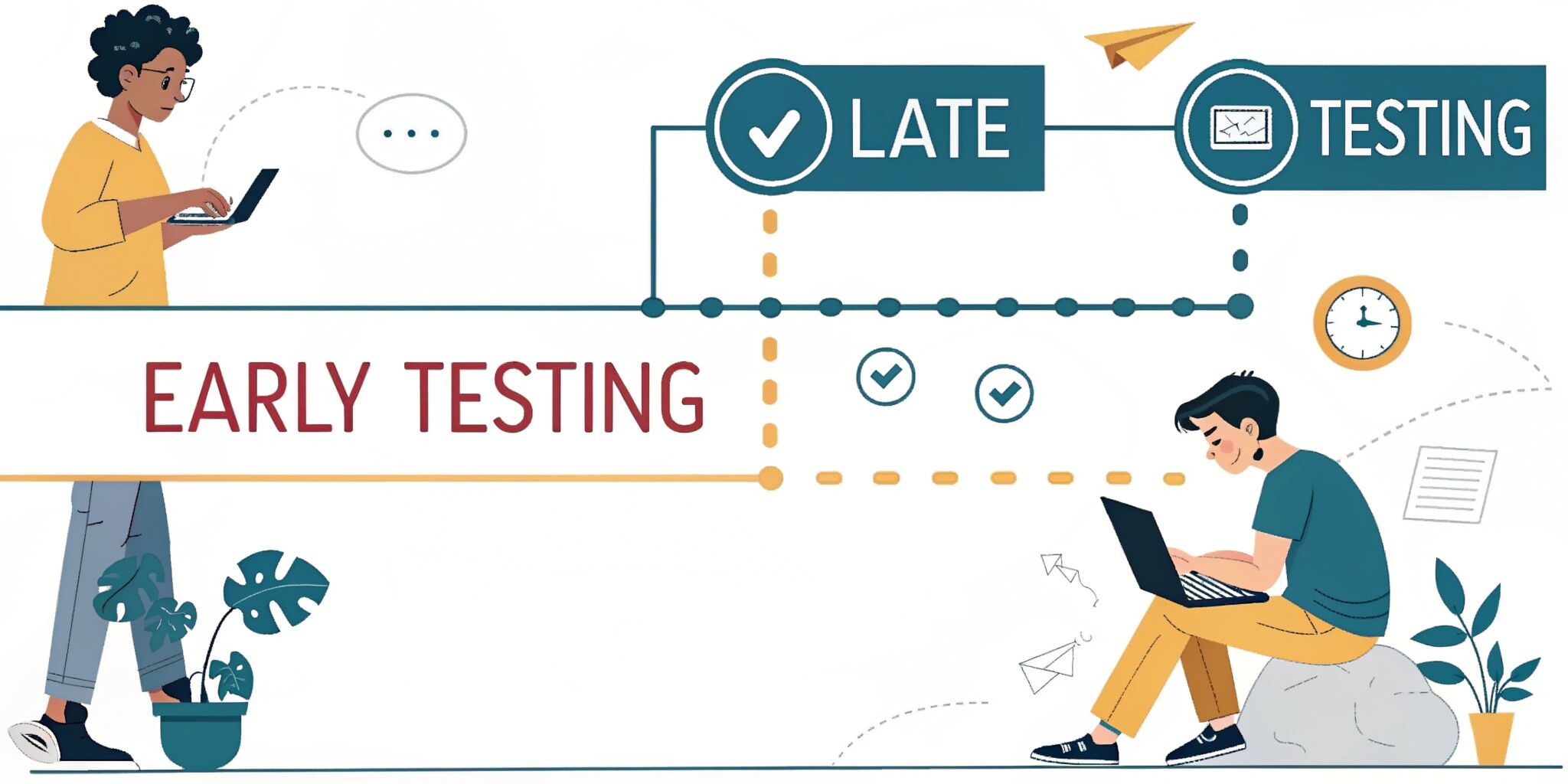
In the world of software development, one of the most common challenges teams face is the presence of bugs that surface late in the development cycle. Many projects follow a traditional approach in which testing is pushed toward the end, just before deployment. While this may seem convenient initially, it often leads to major issues such as unexpected delays, increased costs, and decreased product stability. Instead, prioritizing testing early in the development process—known as the shift-left approach—ensures faster delivery, higher quality, and better collaboration across teams.
Testing early means identifying issues in the initial stages of development rather than waiting until a project is nearly complete. When developers write code without testing along the way, errors accumulate and become harder to trace. Fixing problems late in the cycle becomes more complex because multiple components may be impacted, making debugging more time-consuming and costly. By testing early, developers can catch bugs when they are small and easier to address, preventing them from growing into larger structural issues.
One of the biggest advantages of early testing is cost efficiency. Studies have repeatedly shown that fixing a bug during the development phase costs far less than resolving it after release. In some cases, the cost difference can be up to 100 times more. When defects are discovered late, developers often need to revisit old code, rewrite modules, or refactor major sections, which disrupts progress and shifts focus away from delivering new features. Early testing keeps the workflow smooth and prevents unnecessary rework.
Early testing also improves the overall quality of the application. When developers incorporate unit testing, integration testing, and automated test scripts during the early stages, they gain immediate feedback about code behavior. This allows teams to maintain a clean, stable, and expandable codebase. Continuous feedback boosts confidence, enabling developers to experiment, iterate, and innovate without fear of breaking the system. As a result, the final product becomes more robust and reliable.
Another key benefit of testing early is faster time-to-market. When testing is reserved for the final stage, issues discovered close to release can halt deployment and cause major delays. Clients often become dissatisfied as deadlines shift, and teams experience unnecessary stress. Early testing helps maintain predictable timelines, as quality checks are distributed across the development lifecycle instead of becoming a bottleneck at the end. Through continuous testing and CI/CD automation, organizations can deploy faster and more frequently while maintaining high standards.
Testing early also enhances team collaboration. In modern development environments, quality is a shared responsibility—not just the role of QA teams. When developers, testers, and product managers work closely from the beginning, communication improves and expectations align. Requirements become clearer, architecture decisions become stronger, and developers gain valuable insight into usability and functionality. Rather than working in silos, teams achieve a more cohesive and productive environment.
Early testing significantly reduces risks as well. Applications built without constant testing may appear functional on the surface yet contain hidden issues that only arise in production environments. These problems can lead to serious consequences, including system crashes, security vulnerabilities, performance failures, and customer dissatisfaction. Shift-left testing minimizes such risks by validating every stage of the development journey. Automated testing further strengthens this reliability by enabling developers to run hundreds of tests quickly and consistently.
Beyond technical benefits, testing early promotes better user experiences. Customers expect seamless performance, intuitive functionality, and high reliability. When the development process prioritizes quality from the start, user-centered improvements become easier to implement. Instead of reacting to complaints after release, developers can proactively address potential issues. This ultimately builds trust, strengthens brand credibility, and increases product success.
In conclusion, testing early should be a core practice in modern software development. By catching bugs sooner, reducing costs, improving code quality, speeding up delivery, enhancing communication, reducing risks, and supporting user satisfaction, early testing delivers long-lasting advantages that extend far beyond the initial development phase. Making testing a continuous and collaborative effort is not just a recommendation—it is essential for building successful, scalable, and high-performance software. Developers and organizations that embrace early testing will always stay ahead in a competitive industry where speed, quality, and reliability matter most.