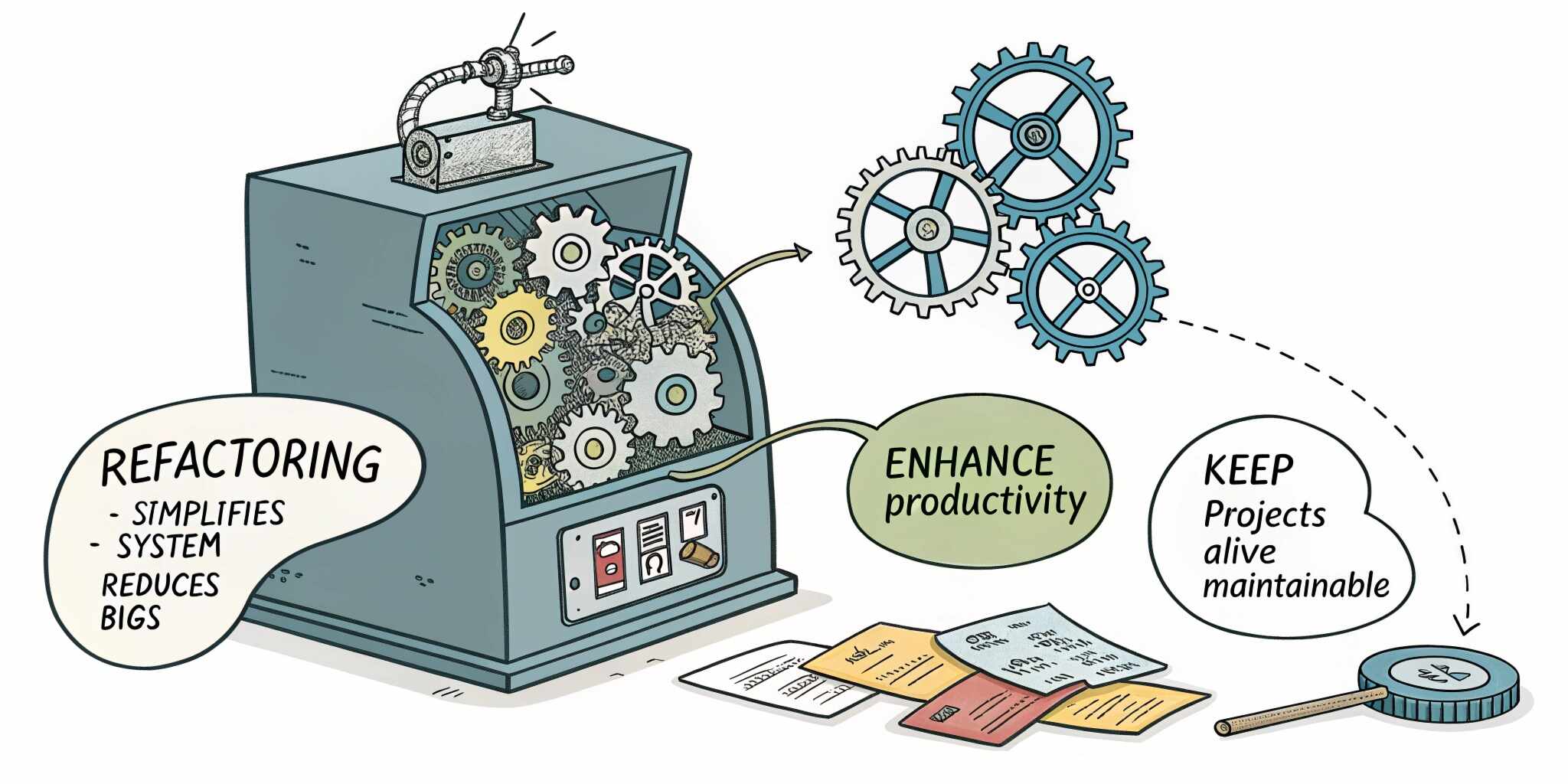
Refactoring is one of the most valuable yet often overlooked practices in software development. Many developers treat refactoring as an optional task, something to address “later when there is time,” usually at the end of a project lifecycle. However, postponing refactoring leads to a buildup of technical debt, messy code, slower performance, and frustrated teams. Refactoring should not be seen as an extra step—it is a crucial part of keeping projects alive, scalable, and maintainable.
At its core, refactoring is the process of improving the internal structure of existing code without changing its external behavior. It is similar to reorganizing a house: you are not building new rooms but rearranging what already exists so it is easier to navigate and cleaner to maintain. When code is written quickly to meet deadlines or when multiple developers contribute different styles, the structure becomes cluttered over time.
Refactoring helps restore order, improves readability, ensures consistency, and allows developers to understand and modify the system with fewer difficulties.
One of the biggest benefits of refactoring is reducing technical debt. Technical debt refers to the extra work created when shortcuts and quick fixes are used instead of well-designed code. While shortcuts may work initially, they become obstacles when the project grows. If technical debt is not addressed early, teams eventually spend more time fixing old issues than building new features. Refactoring prevents this problem by continuously cleaning the codebase, which keeps future development smooth and cost-efficient.
Refactoring also significantly improves maintainability. A maintainable project allows developers to troubleshoot faster, implement updates with confidence, and make changes without fear of breaking something unexpectedly. When code is clean, structured, and logically organized, developers can understand it even if they were not part of the original team. This is particularly important for large, long-term projects where team members frequently change. A messy codebase, on the other hand, becomes a barrier that slows productivity and increases onboarding time for new developers.
Another reason why refactoring keeps projects alive is performance optimization. Over time, code may include redundant logic, outdated libraries, or inefficient loops. Refactoring enables developers to detect inefficiencies and fine-tune performance before problems escalate. A fast and smooth system not only improves user experience but also reduces infrastructure costs in applications that scale with traffic.
More importantly, refactoring reduces the likelihood of bugs. Poorly structured or duplicated code increases risk, since a single change may require multiple modifications in different places. Clean, refactored code centralizes logic and ensures predictable behavior. Teams can apply updates confidently knowing that the codebase is stable and tested. Without refactoring, every new feature becomes riskier and bug-fixing becomes increasingly complex.
From a project management perspective, refactoring improves collaboration and communication within a development team. Code that follows consistent standards allows all members to contribute easily and review code more effectively. Teams that avoid refactoring eventually experience friction, miscommunication, and slower delivery cycles. Continuous refactoring supports agile methodology, where improvement is ongoing rather than postponed.
While refactoring has clear benefits, it needs to be planned and implemented wisely. It is most successful when done incrementally rather than waiting until the end. Small improvements performed continuously—such as simplifying a function, removing duplicate logic, or improving naming conventions—add up to major benefits. Adding refactoring tasks to sprint cycles, performing it after new features are built, and integrating automated testing are proven strategies that keep projects healthy.
In conclusion, refactoring is not a task to be delayed. It is an essential, proactive step that protects a system’s long-term health. It keeps projects scalable, easier to maintain, improves performance, prevents technical debt, and ensures that development remains smooth and efficient. Projects that prioritize refactoring continue to evolve successfully, while those that ignore it eventually collapse under the weight of their own complexity. Developers who understand the value of refactoring not only write better code—they build software that lasts.