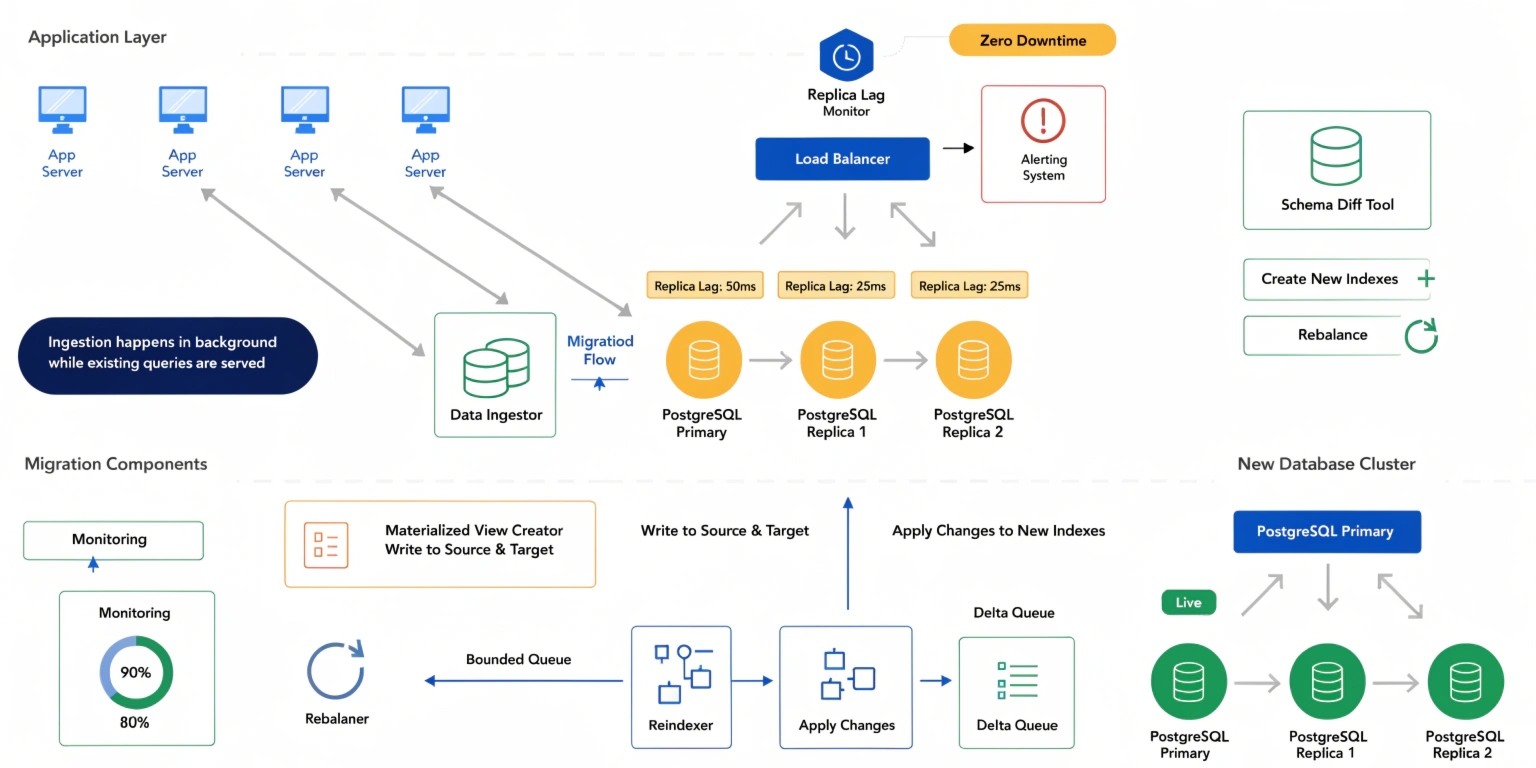
In modern software systems, downtime is costly—both financially and reputationally. For high-traffic platforms, even a few seconds of disruption can lead to lost revenue and poor user experience. That’s why achieving zero-downtime database migrations has become a critical requirement for scalable systems.
Companies like Netflix and Facebook operate at massive scale, handling millions of requests per second. Yet, they continuously evolve their databases without interrupting users. How do they manage this? Let’s explore.
What Are Zero-Downtime Migrations?
Zero-downtime migrations refer to making changes to a database schema or structure without taking the system offline. These changes may include:
- Adding or modifying tables
- Updating indexes
- Changing data formats
- Migrating data across systems
The goal is to ensure that users experience no interruptions during these updates.
Why Traditional Migrations Fail
In traditional setups, database changes often require locking tables or restarting services. This leads to:
- Temporary outages
- Increased latency
- Failed transactions
In high-traffic systems, such disruptions are unacceptable. Modern systems require continuous availability, even during updates.
Core Principles of Zero-Downtime Migrations
1. Backward Compatibility
Every change must be compatible with both old and new versions of the application. This ensures that during deployment, different versions of the app can interact with the database safely.
For example:
- Add new columns without removing old ones
- Avoid breaking schema changes
- Maintain dual compatibility
2. Expand and Contract Strategy
This is one of the most widely used approaches:
- Expand Phase: Add new schema elements (columns, tables) without removing old ones
- Migrate Phase: Gradually move data to the new structure
- Contract Phase: Remove old schema elements once no longer needed
This phased approach minimizes risk and ensures smooth transitions.
3. Blue-Green Deployments
Blue-green deployment involves running two environments:
- Blue: Current production
- Green: New version with updates
Traffic is gradually shifted from blue to green after testing. If issues arise, rollback is immediate.
4. Rolling Deployments
Instead of updating all servers at once, rolling deployments update them incrementally. This ensures that part of the system remains operational at all times.
Online Schema Changes
Tools and techniques for online schema changes allow modifications without locking the database.
Popular tools include:
- gh-ost
- pt-online-schema-change
These tools create a shadow table, migrate data gradually, and switch over seamlessly.
Handling Data Migration Safely
Data migration is often the riskiest part. Best practices include:
- Migrating in small batches
- Monitoring performance during migration
- Using background jobs for data transformation
- Validating data integrity post-migration
This reduces the risk of system overload and ensures consistency.
Database Versioning
Version control for database schemas is essential. Tools like Flyway and Liquibase help manage incremental changes and maintain consistency across environments.
Monitoring and Observability
Real-time monitoring is critical during migrations. Track:
- Query performance
- Error rates
- System latency
- Database load
Quick detection of anomalies allows teams to respond before issues escalate.
Common Challenges
Despite best practices, challenges remain:
- Data inconsistency: During migration phases
- Increased complexity: Managing multiple schema versions
- Performance impact: Temporary load spikes
- Rollback difficulty: Especially with destructive changes
Proper planning and testing are essential to mitigate these risks.
Best Practices Summary
To achieve zero-downtime migrations:
- Design for backward compatibility
- Use expand-and-contract strategies
- Leverage online schema change tools
- Deploy incrementally (rolling or blue-green)
- Monitor continuously
- Test thoroughly in staging environments
Conclusion
Zero-downtime database migrations are no longer optional in high-traffic systems—they are a necessity. By adopting modern deployment strategies and tools, organizations can evolve their databases without disrupting users.
The key lies in careful planning, incremental changes, and continuous monitoring. Companies that master these practices gain a significant competitive advantage by delivering uninterrupted, reliable services.
In an always-on world, the ability to innovate without downtime is what separates scalable systems from fragile ones.