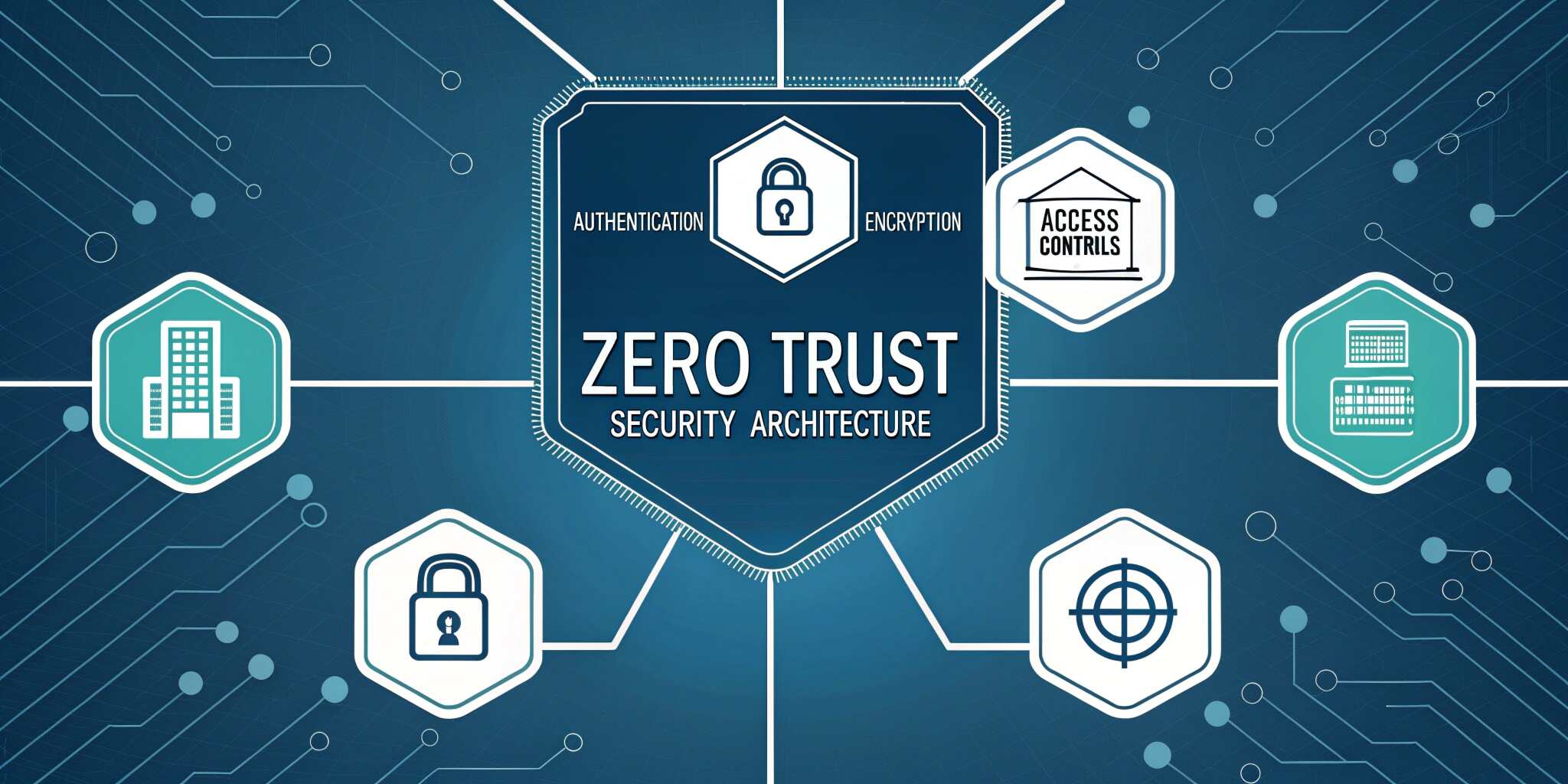
As cyber threats grow more advanced and digital ecosystems expand across cloud, on-premise, and remote environments, traditional perimeter-based security models are no longer enough to protect enterprise systems. Organizations can no longer rely on firewalls and network boundaries to secure critical data, especially in an era of distributed workforces, IoT devices, and complex multi-cloud architectures. To address these challenges, enterprises are turning to Zero Trust Security Architecture, a modern cybersecurity framework built on the principle of “never trust, always verify.”
The Zero Trust model rejects the assumption that anything inside the corporate network is safe. Instead, it ensures that every request—whether from users, applications, or devices—is continuously authenticated and authorized before access is granted. This approach significantly reduces the risk of unauthorized entry, insider attacks, lateral movement, and large-scale breaches.
A foundational component of Zero Trust is identity-based access control. Instead of providing broad network-level access, Zero Trust enforces strict authentication and authorization based on user identity, device security posture, location, and behavior patterns. Multi-Factor Authentication (MFA) and Single Sign-On (SSO) become essential tools to validate identity before granting system access.
Another key element is least privilege access, which ensures users, applications, and workloads receive only the minimum required permissions. This prevents attackers from exploiting elevated access and minimizes damage if an account or device is compromised. Privilege access management tools and just-in-time permissions are commonly used to enforce these principles.
Zero Trust also introduces micro-segmentation, dividing networks into small isolated zones to prevent lateral movement during an attack. For example, if a threat actor breaches one application or server, micro-segmentation prevents them from spreading to other systems, protecting core databases and critical workloads. This segmentation also enables faster threat containment and forensic visibility.
Continuous monitoring and verification play a crucial role in Zero Trust implementation. Instead of validating identity once, Zero Trust continuously tracks user behavior, device health, and access patterns in real time. If anomalies appear—such as login attempts from unusual locations or abnormal activity patterns—access can be restricted or automatically blocked. This dynamic security posture enables proactive prevention rather than reactive detection.
Zero Trust is particularly essential in today’s cloud-first world, where applications and data reside across public, private, and hybrid clouds. Traditional perimeter-based controls cannot effectively manage distributed systems. Zero Trust ensures that every access request, regardless of location, passes through strong security gates. It also supports secure multi-cloud collaboration and third-party access management.
The model is equally beneficial for remote and hybrid workforces. With employees connecting from personal networks and unmanaged devices, enterprises face increased exposure to cyber risks. Zero Trust secures remote access with device compliance checks, endpoint security monitoring, and encrypted access pathways, ensuring corporate data remains protected regardless of location.
Implementing Zero Trust does come with challenges. It requires a cultural shift within IT teams, advanced identity and access management systems, continuous monitoring tools, and strong integration between security platforms. Many organizations adopt a phased rollout, beginning with sensitive data protection, then expanding into network segmentation, privileged access, and enterprise-wide automation.
However, the long-term benefits are substantial. Enterprises adopting Zero Trust achieve reduced breach risk, improved visibility, enhanced regulatory compliance, stronger cloud security, and a more resilient cybersecurity posture. With cyberattacks increasing in volume and complexity, Zero Trust has become a necessity rather than an option.
In the future, Zero Trust will evolve further with AI-driven access decisions and automated threat response. Integrating Zero Trust with technologies such as Secure Access Service Edge (SASE), Extended Detection and Response (XDR), and Security Service Edge (SSE) will enable unified, intelligent, and adaptive enterprise security frameworks. Organizations that adopt Zero Trust early will be better equipped to navigate digital transformation securely while maintaining trust and operational confidence.